How to Change a Tire: A Step-by-Step Guide for Safe DIY Tire Changing
Learn how to change a tire safely and correctly with this step-by-step guide. Includes tool checklist, safety warnings, and torque specs from an ASE Master...
If you've ever been stranded with a flat tire, knowing **how to change a tire** can turn a roadside headache into a manageable task. I'm Dave Krueger, ASE Master Technician with 22 years in dealership service, and I've seen more stripped lug nuts and bent jack points than I can count. This guide will walk you through the safe, correct way to change a tire—no shortcuts, no guesswork. You can do this. Here's the safe, right way.
Safety First Before You Start
Before you even break out the jack, park on a firm, level surface away from traffic. Engage your parking brake firmly. If you have a manual transmission, leave it in gear (or Park for automatics). Turn on your hazard lights. Place a heavy object like a rock or a spare tire behind the wheel diagonally opposite the flat. Safety First: Never change a tire on a slope or soft ground—the jack can slip and the car can fall. If you're on the shoulder of a busy road, call for professional help. Your life is worth more than a spare tire.
Tool Check: What You'll Need
You'll need: a spare tire (properly inflated), a car jack (scissor or hydraulic), a lug wrench (or a breaker bar with the correct socket), wheel chocks or blocks, a flashlight, and gloves. Optional but recommended: a torque wrench (for re-tightening later) and a piece of cardboard to kneel on. Tool Check: Make sure your spare tire has adequate pressure—many factory spares are underinflated from sitting. Also verify that your lug wrench fits your lug nuts; some aftermarket wheels use different sizes.
Step-by-Step: How to Change a Tire
Now let's get into the actual procedure. Follow these steps in order:
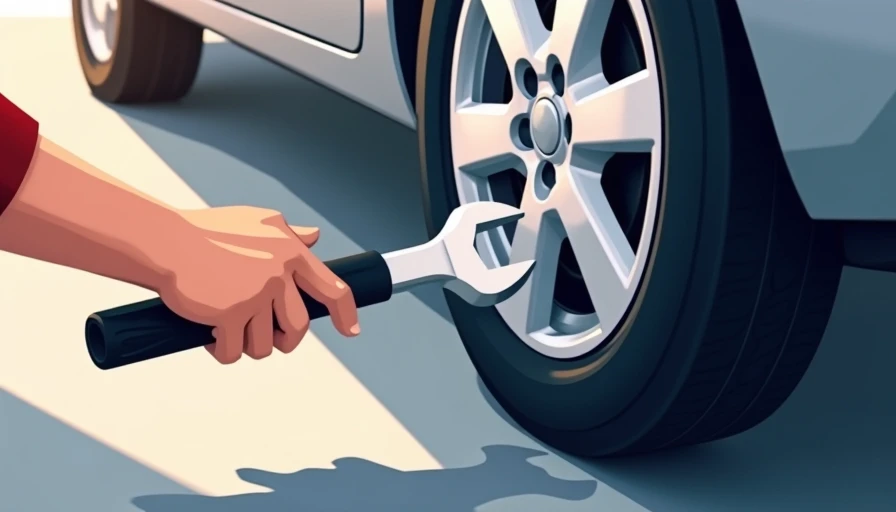
- **Loosen the lug nuts slightly** while the car is still on the ground. Turn counterclockwise with your lug wrench. Don't remove them, just break them loose—about a quarter turn each. This prevents the wheel from spinning when you apply force.
- **Position the jack** at the designated jack point under the car. Consult your owner's manual for the exact location. Usually it's a reinforced metal seam near the wheel. Place the jack squarely under that point.
- **Raise the car** until the flat tire is about 2 inches off the ground. Make sure the jack is stable before you go under the car—never put any body part under the vehicle while it's only on a jack. Use jack stands if available, but for a roadside change, just lift enough to clear the wheel.
- **Remove the lug nuts completely** and pull the flat tire straight off the hub. Place it under the car near the jack as a safety cushion in case the jack fails. You can do this. Here's the safe, right way.
- **Mount the spare tire** onto the lug studs. Align the holes and push it all the way onto the hub. If it doesn't slide on easily, check that the parking brake is on and wiggle the tire gently.
- **Hand-tighten the lug nuts** in a star pattern (tighten one, skip one, tighten the next). This ensures even pressure. Use the lug wrench to snug them up—don't fully torque them yet.
- **Lower the car** so the spare tire touches the ground but still takes some weight. Then use the lug wrench to fully tighten the nuts in the same star pattern.
Torque the Lug Nuts to Spec
After lowering the car completely, you need to torque the lug nuts to the manufacturer's specification—typically between 80-100 foot-pounds for most passenger cars. Torque to spec—and yes, the spec matters. Overtightening can warp brake rotors; undertightening can cause the wheel to come loose. If you don't have a torque wrench, tighten as much as you reasonably can with the lug wrench, then drive to a shop and have them torque it properly. Here's what I see go wrong most often: people forget to re-torque after 50 miles. Heat cycles can loosen the nuts, so mark your calendar.
When to Call a Professional
Not every flat is a do-it-yourself situation. If you're on a soft shoulder, in heavy traffic, or if you don't have a working jack or spare tire, call for roadside assistance. Also call a pro if the spare is a donut (compact spare) and you're driving more than 50 miles—they're only for short-distance use. If you're unsure about any step, especially jack placement, it's better to let someone else handle it. Your safety is the priority.
Final Check After Changing the Tire
Once the spare is on, drive at moderate speed (under 50 mph) and get the flat repaired or replaced as soon as possible. Check the spare's air pressure at the next gas station. And always carry a fully inflated spare, a jack, and a wrench in your trunk. Knowing **how to change a tire** is a skill every driver should have—but practice it in your driveway first so you're ready when it counts. You can do this. Here's the safe, right way.