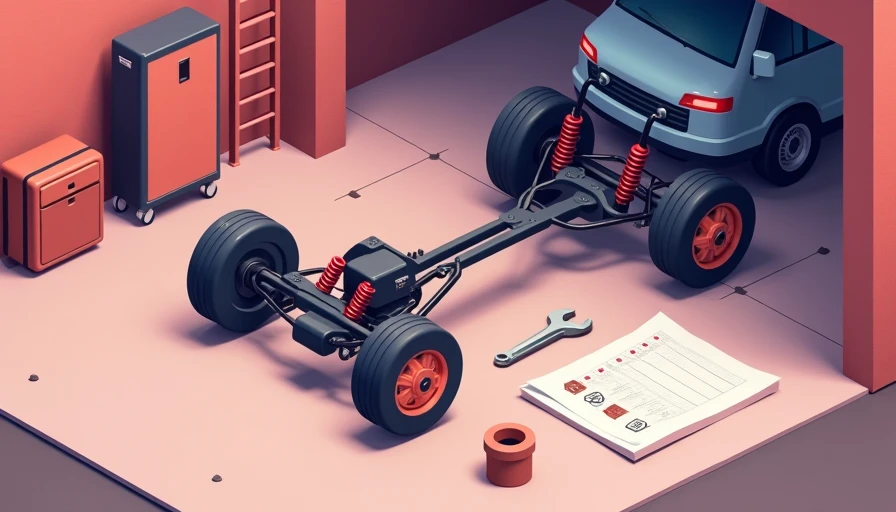
How to Check Sway Bar Links: Safe Inspection Steps for Any DIY Driver
How to check sway bar links the safe, right way: symptoms, tool list, step-by-step inspection, torque tips, and when a worn link needs replacement today.
Most people blame struts, tires, or even wheel bearings when a front end starts knocking, but how to check sway bar links is usually a faster and cheaper first test. A worn link can clunk over driveway lips, rattle on small washboard bumps, and make the car feel a little loose when you steer through a quick lane change. You do not need a scan tool or a lift to start. You need a flat spot, basic hand tools, and patience. You can do this. Here is the safe, right way.
Safety First and Tool Check
Safety First: park on level ground, set the parking brake, and chock the wheels that stay on the ground. If you raise the car, use a floor jack only to lift and jack stands only to hold it. Never crawl under a car that is supported by the jack alone. Tool Check: a flashlight, a small pry bar, gloves, a breaker bar, and a torque wrench if you plan to remove anything. A helper is useful when you want someone to rock the car while you watch the suspension move. Start with the car cold if you are working near the exhaust or catalytic converter. If a wheel is covered in ice, mud, or heavy rust flakes, clean the area first so you can see the link ends clearly.
How to check sway bar links without tearing into the car
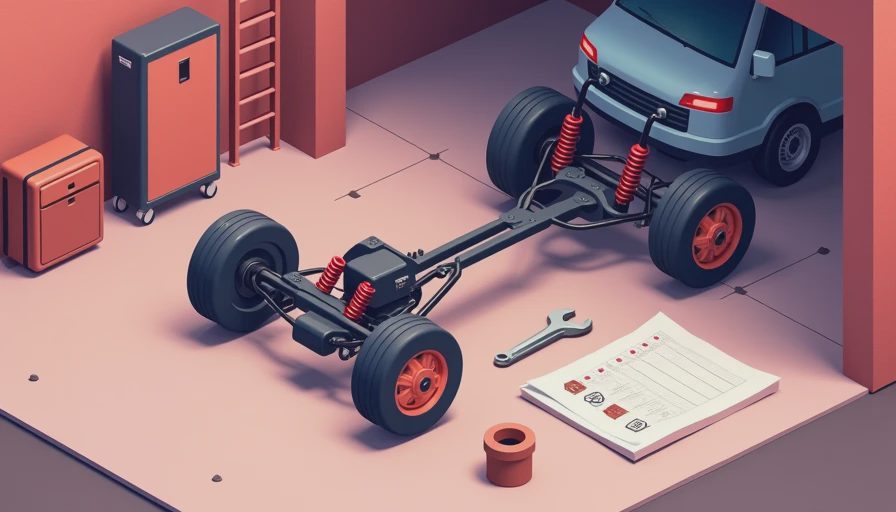
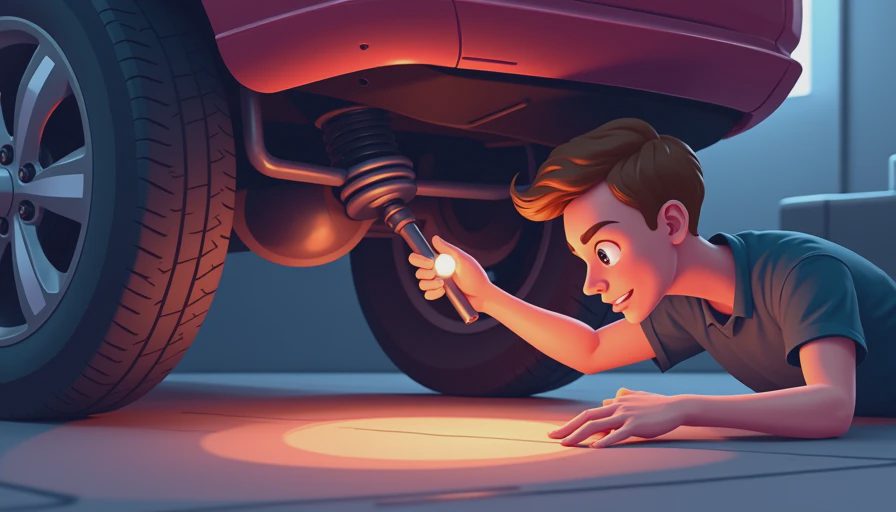
On many vehicles, the sway bar link is a short rod with a ball joint at each end. First, look for obvious damage with the wheels pointed straight ahead. A torn boot, a split bushing, or a shiny rust trail at the joint means water has been inside long enough to wear the joint. Next, push down on one front corner and release it. A good link stays quiet. A bad one often clicks once or twice as the bar twists. Then raise one side of the axle so the suspension hangs and the bar unloads. Grab the link and try to move it by hand. You are looking for side play, loose joints, or a stud that spins with almost no resistance. A healthy link should feel tight and controlled, not sloppy or clattery.
What the noise and feel tell you
Here is what I see go wrong most often: drivers hear a clunk and assume the whole suspension is shot. Usually the sound is more specific than that. A sway bar link usually makes a sharp tap over small, repeated bumps, not a deep thud like a bad strut mount. If the noise shows up mostly on one side, that side is worth checking first. If the steering feels vague at highway speed, do not blame the link before you inspect tie rods, ball joints, and tire wear. If the car has a bouncy or floating feel, the shock or strut may be the bigger problem. A simple end-link failure is often easier to spot than that. Brands like Moog, ACDelco, Motorcraft, and Mevotech all make common replacements, and a pair of aftermarket links often lands somewhere around 30 to 120 dollars depending on the car.
When replacement makes sense
Replace the link when the joint has visible looseness, the boot is torn open, or the rod can be twisted with almost no damping. Do the pair if both sides have similar mileage or rust, because the other side is often close behind. If the nut is seized and the stud spins in the joint, stop before you strip the hardware. Rust belt cars can turn a simple job into a cut-and-replace job fast. When you install a new link, torque to the factory specification for your exact vehicle. Many passenger cars use fasteners in the 35 to 70 lb-ft range, but the service data wins every time. On some designs, final tightening is done at normal ride height so rubber bushings are not preloaded. If your car uses a through-bolt with a locking nut, replace the hardware if the threads are damaged. Torque to spec, and yes, the spec matters.
Cost, parts, and the quick road test
If you are pricing the repair, a DIY job is often just the parts plus a little time. Aftermarket links can be 30 to 120 dollars for the pair, while OEM pieces may run 70 to 180 dollars or more. A shop visit can climb once rust, broken hardware, or a stubborn bolt adds labor. After the repair, take a short test drive over a familiar rough road. One speed bump, one patched intersection, and one slow driveway turn will tell you a lot. The clunk should be gone, and the steering should feel more settled. If the sound remains, move on to the sway bar bushings, strut mounts, and other front-end wear points. Once you learn how to check sway bar links, you can separate a simple end-link fix from a bigger suspension repair and spend your money where it matters.
Comments
No comments yet — be the first to share a thought.