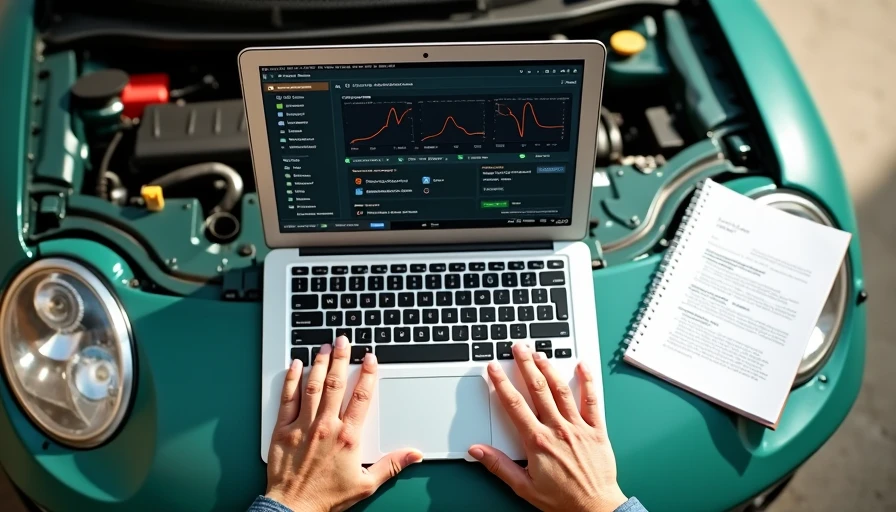
How to Reset Throttle Position Sensor Without Scanner: The Safe Way
How to reset throttle position sensor without scanner on most cars, plus the safe relearn steps, common mistakes, and when a scan tool or pro helps.
A lot of drivers replace parts before they understand the problem, and that gets expensive fast. If you are looking up how to reset throttle position sensor without scanner, the first thing I want you to know is that many cars do not need a new sensor at all. On a lot of vehicles, the issue is a dirty throttle body, a weak battery, or a throttle relearn that never finished after a battery disconnect or repair.
That is why I slow this job down. The throttle position sensor, or TPS, reports throttle angle to the engine computer. On older cable-throttle cars it can be a separate sensor. On many newer drive-by-wire systems, it is part of the throttle body assembly and the computer is constantly learning where closed throttle lives. If that learning is off, the idle can hunt, the pedal can feel lazy, or the check engine light can stay on.
What the throttle sensor is actually doing
The TPS is not magic. It is a voltage signal that changes as the throttle opens and closes. The computer uses that signal for idle control, fuel delivery, transmission behavior, and even cruise control on some vehicles. If the closed-throttle reading is noisy or the throttle plate is caked with carbon, the computer may think the throttle is open a little when it is not. That is where rough idle and odd shifting can start.
Here is what I see go wrong most often. Someone cleans the throttle body, disconnects the battery, or changes the battery, and then expects the engine to settle down immediately. Sometimes it does. Sometimes it needs a relearn drive. And sometimes the real problem is not the sensor at all. A vacuum leak, a dirty mass air flow sensor, or low battery voltage can mimic a bad TPS all day long.
The useful part of how to reset throttle position sensor without scanner is knowing the limit. If the sensor is worn out, if the throttle body motor is failing, or if the computer has a hard fault code, no amount of key cycling will fix it. The goal here is to handle the simple relearn first, safely, before you spend money on parts.
How to reset throttle position sensor without scanner the right way
Safety First: park on level ground, set the parking brake, put the transmission in Park or Neutral, and turn off every electrical load. If your car needs a radio code or has a memory saver recommendation, get that sorted before you disconnect anything.
Tool Check: a 10 mm wrench for the battery terminal, a clean rag, throttle body cleaner that is safe for coated throttle plates, and a flashlight. If you plan to clean the throttle body, do not spray cleaner into a hot engine or soak the electronics. If you remove the intake duct, loosen the clamps carefully and inspect the boot for cracks while you are there.
Start with a visual check. Make sure the air intake tube is seated, the clamps are snug, and there are no obvious vacuum hose splits. If the throttle bore is dirty, clean it first. Use the rag and cleaner to remove the carbon ring around the plate and bore. On many engines that carbon ring is the whole problem.
Next, disconnect the negative battery cable and let the car sit for 10 to 15 minutes. On some models I prefer closer to 20 minutes so the modules fully power down. Reconnect the cable, tighten it securely, and make sure the connection is clean. Then turn the key to ON for about 30 seconds without starting the engine. That gives the throttle motor and sensors a chance to wake up. Turn the key off for 10 seconds, then start the engine without touching the gas pedal.
Let it idle fully undisturbed. Three to five minutes is a good starting point on many cars, but some need longer if the idle was very unstable. After that, drive it with a mix of light throttle and steady cruising. The computer learns best when it sees idle, gentle acceleration, and deceleration. If the idle flares slightly at first, that can be normal. What you do not want is a flashing check engine light, a stall, or a pedal that goes dead.
If you remove the throttle body on a model that uses separate fasteners, torque to spec and yes, the spec matters. These fasteners are often inch-pound hardware, not something you crank down with a big ratchet. The exact value belongs to the factory service information for your engine.
When the relearn does not take
If the idle still surges after the relearn, stop chasing the same button twice. That is your clue to look elsewhere. A vacuum leak around the intake boot or brake booster can keep the engine from settling. A dirty or failing mass air flow sensor can skew the air reading. A weak battery can make the whole system act strange, especially right after a jump start or replacement.
This is also where how to reset throttle position sensor without scanner stops being enough by itself. Many late-model cars use electronic throttle control logic that wants a proper idle relearn or throttle adaptation command. If the engine computer has stored codes like P0121, P0221, P2101, or P2111, there may be more going on than a simple reset. Repeating the battery disconnect only wastes time and can create more memory issues in other modules.
One thing to remember: cleaner is not a diagnosis. Throttle body cleaner can help a dirty plate move smoothly, but it will not fix a worn sensor track or a damaged throttle motor. If the plate sticks, the connector is loose, or the harness has rubbed through, that needs hands-on inspection.
A real garage pattern I see all the time
A driver comes in after replacing a battery and the idle is now high or unstable. They assume the new battery caused a bad sensor. More often, the battery change exposed a problem that was already there. Maybe the throttle body had a heavy carbon edge. Maybe the intake duct had a small crack on the bottom side that was easy to miss. Maybe the car just needed a clean relearn after power was lost.
When people ask me how to reset throttle position sensor without scanner, this is where I slow them down and compare the cost of guessing with the cost of checking. A can of throttle body cleaner is usually under 10 dollars. A new intake boot might run 20 to 60 dollars. A shop diagnostic visit often lands around 120 to 180 dollars, and that is cheap compared with replacing a throttle body assembly you did not need.
If you want to be methodical, watch the idle speed, listen for hissing, and check battery voltage too. A healthy battery should sit around 12.6 volts engine off and roughly 13.5 to 14.7 volts running. Low system voltage can make the relearn stumble, especially on newer vehicles with a lot of electronic load.

When to stop and call a pro
Stop and get help if the engine goes into limp mode, the electronic throttle warning light comes on, or the car will not hold idle after a proper relearn drive. Also stop if the accelerator pedal feels delayed, the engine races on its own, or the throttle body connector shows corrosion or melted plastic. Those are not guess-and-pray problems.
A good technician can look at live data for commanded throttle angle, actual throttle angle, pedal position, and idle control counts. That is the fast way to tell whether the sensor is lying, the throttle motor is sticking, or the computer is reacting to another fault. On many modern cars, replacing the TPS by itself is not even the repair because the sensor is built into the throttle body assembly.
You can do this. Here is the safe, right way: start with inspection, clean what is dirty, relearn what was lost, and only buy parts when the data supports it. That approach saves money, keeps you out of trouble, and gets the car back to a steady idle without wasting a weekend.
Comments
No comments yet — be the first to share a thought.