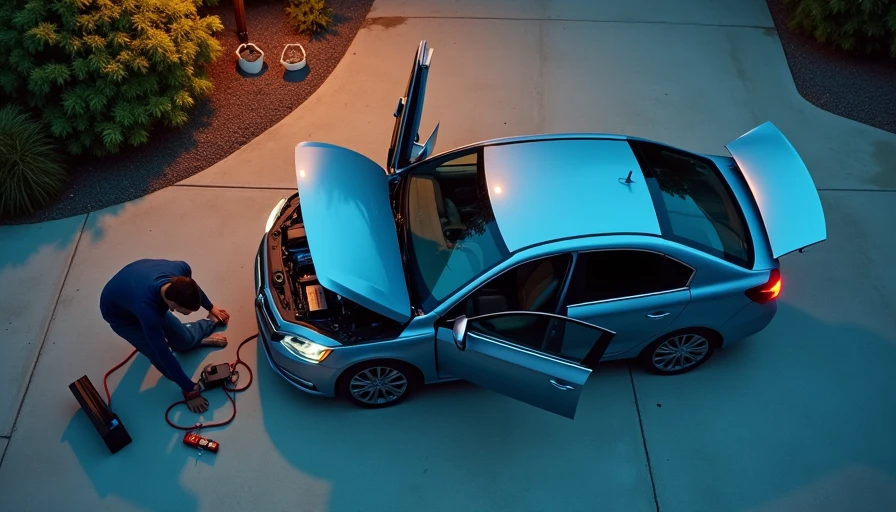
Jump Start Car Not Working? Diagnose the Problem Safely
Jump start car not working? Use this safe DIY checklist to test cables, battery, starter, and charging faults before replacing parts or calling for help.
When a jump start car not working situation leaves you stranded, the battery is not automatically the only problem. A dead battery, loose terminal, poor jumper cable, failed starter, blown fuse, or charging-system fault can all produce similar symptoms. I have seen drivers keep cranking with a weak connection until the cables become hot, and that is where a simple roadside repair can become a damaged battery or wiring problem. You can do this. Here's the safe, right way.
Safety First Before You Try Again
Park both vehicles on stable, level ground with the transmissions in Park, or Neutral with the parking brake firmly applied for a manual transmission. Turn off headlights, climate controls, radios, and other accessories. Do not attempt a jump if the battery case is cracked, swollen, leaking, frozen, or giving off a strong rotten-egg odor. A damaged lead-acid battery can vent explosive gas.
Keep cigarettes, flames, and metal jewelry away from the battery. Wear safety glasses, and never allow the red and black clamps to touch each other. Modern cars can have sensitive electronics, so use the owner's manual to confirm the designated positive and negative connection points. Some vehicles have a remote positive terminal and a specific chassis ground rather than a direct battery-negative connection.
Tool Check: You need quality jumper cables with insulated clamps, work gloves, safety glasses, a flashlight, and a digital multimeter if one is available. A portable jump pack rated for your engine size is another useful option. Do not use a tiny motorcycle booster on a large V8 and expect a reliable result.
Check the Cables and Connections First
A jump start car not working problem is often caused by contact, not a failed part. Open the hood and identify the positive terminal, marked with a plus sign or red cover, and the negative terminal, marked with a minus sign. If the terminals are covered with thick white or green corrosion, the clamps may be gripping residue instead of clean metal.
With both vehicles turned off, connect the red clamp to the disabled vehicle's positive terminal. Connect the other red clamp to the donor battery's positive terminal. Attach the black clamp to the donor battery's negative terminal. Attach the final black clamp to a clean, unpainted metal engine or chassis ground on the disabled vehicle, away from the battery. This reduces the chance of a spark directly beside the battery.
Start the donor vehicle and let it run at a normal idle for three to five minutes. Then try the disabled vehicle for no more than about five seconds. If it does not crank, wait at least 30 seconds before another attempt. Recheck every clamp. A clamp that feels tight but is sitting on corrosion is not making a useful electrical connection.
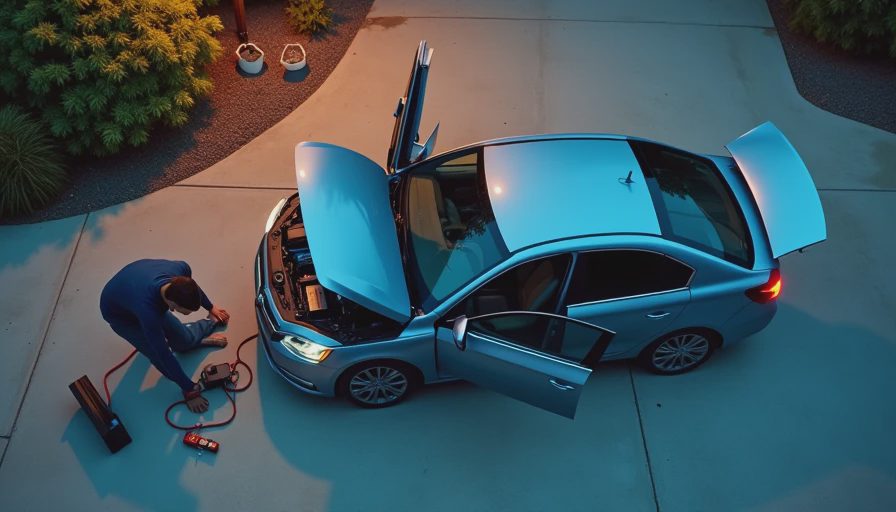
If the cables become very hot, stop immediately and disconnect them in reverse order: black from the disabled vehicle, black from the donor, red from the donor, and red from the disabled vehicle. Hot cables can indicate an incorrect connection, an internal short, undersized cables, or a severely damaged battery.
What the Sound Tells You
The next clue is the sound. Rapid clicking usually means the starter solenoid is engaging, but voltage collapses when the starter demands current. That points toward a weak battery, poor terminal connection, or inadequate jumper cables. One solid click with no engine rotation can indicate a starter motor or solenoid problem, although a low battery can cause it too.
If you hear nothing at all, inspect the battery terminals, ground cable, main fuse, and transmission position. Try starting an automatic vehicle in Neutral instead of Park while holding the brake. A failed park-neutral safety switch can prevent cranking. On a manual transmission, press the clutch fully to the floor; a faulty clutch safety switch can create the same symptom.
If the engine turns normally but does not fire, the jump may have worked. The problem is now elsewhere, such as fuel delivery, ignition, an immobilizer system, or an engine-management fault. Continuing to jump it will not fix a fuel pump or ignition problem.
Test the Battery and Charging System
Once the engine starts, do not immediately shut it off. Let it run for several minutes, then drive for at least 20 to 30 minutes if conditions are safe. Idling alone may not restore enough charge. A battery that required a jump can still be near the end of its service life, especially after several winters or repeated deep discharges.
With the engine off for several hours, a healthy fully charged 12-volt battery commonly measures about 12.6 volts at rest. Around 12.2 volts indicates a substantially discharged battery, while a reading near 12 volts suggests a serious low-charge condition. During operation, many conventional vehicles show approximately 13.5 to 14.8 volts at the battery, though smart charging systems can vary that figure.
A jump start car not working after several correct attempts deserves a voltage test rather than more cranking. Many auto parts stores provide battery and alternator testing, and a shop can perform a load test that reveals a battery with adequate resting voltage but poor starting capacity. Replacing a battery without testing the alternator can leave you stranded again.

When the Starter or Ground Cable Is the Culprit
A strong battery and good cable connections do not guarantee a successful start. If the lights remain bright but the starter only clicks once, the starter may have worn brushes, a failed solenoid, or an internal electrical fault. Do not hit the starter with a hammer on a modern vehicle unless a qualified technician has identified that component and explained the risk; nearby sensors and wiring can be damaged.
Inspect the negative battery cable where it attaches to the body and engine. A broken or heavily corroded engine ground can allow lights and accessories to work while preventing the starter from receiving a complete circuit. Look for loose bolts, green corrosion, frayed strands, or heat damage. Never substitute a random wire for a proper battery cable.
If you remove and clean a battery terminal, disconnect the negative cable first and reconnect it last. Use a battery-terminal brush, not a knife that can gouge the post. Battery hold-downs and terminal clamps must be secure, but do not overtighten them. Many terminal clamps use roughly 4 to 6 Nm, and hold-down fasteners vary widely by vehicle. Torque to spec — and yes, the spec matters. Use the service information for your exact year, make, and model.
Know When to Stop and Call for Help
Stop troubleshooting if the battery is swollen, leaking, smoking, or hot; if sparks continue after correcting the connection; or if the cables melt or smell like burning insulation. Also stop if the vehicle has been submerged, involved in a collision, or equipped with a hybrid or high-voltage system you do not understand. Do not connect jumper cables to orange high-voltage components.
If a jump start car not working condition remains after clean connections, a charged booster, and two short attempts, arrange roadside assistance or a tow. A professional can test voltage drop, starter current draw, battery condition, and alternator output without guessing. That diagnostic visit often costs less than buying a battery, starter, and alternator one at a time.
Before winter, have the battery tested, clean corrosion promptly, and keep a properly rated jump pack in the vehicle. Save the correct connection procedure in your phone. The goal is not merely to make the engine run once; it is to identify why it failed and prevent the same roadside surprise next week.
Comments
No comments yet — be the first to share a thought.