When Driving in Heavy Traffic You Should Follow These Safety Habits
When driving in heavy traffic you should stay alert, leave space, and manage speed. Get calm, practical safety tips from an ASE Master Technician before...
A common mistake I see is treating a traffic jam like a low-risk situation. Vehicles are moving slowly, so drivers relax, pick up their phones, or follow the car ahead by only a few feet. When driving in heavy traffic you should stay focused, leave a usable escape space, and make every speed change gradually. A collision at 15 mph can still damage bumpers, trigger airbags, or send a distracted driver into the next lane.
I spent 22 years in dealership service, and plenty of traffic-related crashes came through the shop with no dramatic mechanical failure. The causes were usually simple: worn tires, poor visibility, an overloaded vehicle, or a driver who reacted too late. You can reduce those risks before leaving the driveway and then use a calm, repeatable technique behind the wheel.
Prepare the Vehicle Before the Traffic Starts
Safety First: Do not begin a trip if you cannot see clearly through the windshield, your tires are visibly damaged, or a warning light indicates a serious problem. Heavy traffic gives you fewer opportunities to pull over safely. Clear snow and ice completely, clean both side mirrors, and make sure the headlights, brake lights, and turn signals work.
Tool Check: You do not need a toolbox on the passenger seat, but you should have a properly inflated spare or an inspected tire repair kit, a charged phone stored out of reach, and a flashlight. Check tire pressure when the tires are cold and use the pressure listed on the driver-door label, not the maximum pressure molded into the tire sidewall. If your tread is near the wear bars, replace the tire rather than trying to stretch another season from it.
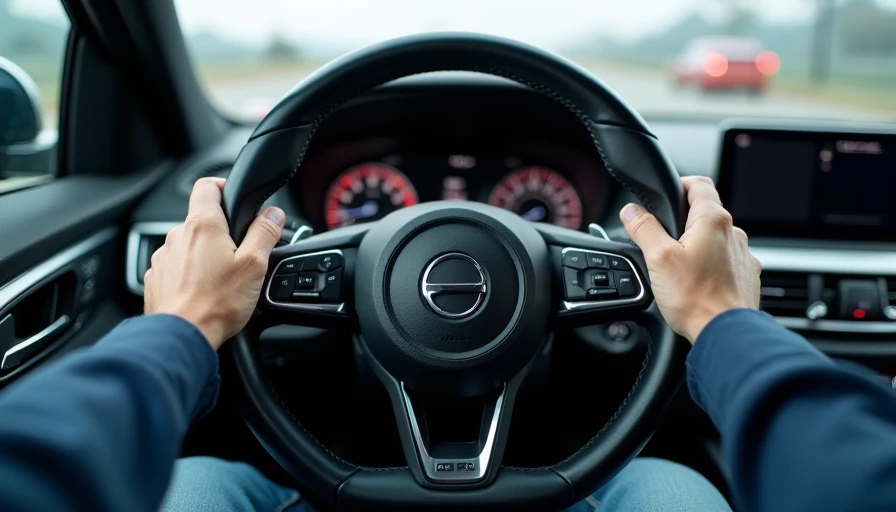
Set the seat so your wrists can rest near the top of the steering wheel without locking your elbows. Buckle every occupant, secure loose cargo, and adjust climate controls before entering the congested road. When driving in heavy traffic you should never use a moving vehicle as the time to search for a song, enter a navigation address, or reach into a bag.

Build a Cushion Around Your Vehicle
The car directly ahead is not your only concern. Watch at least two or three vehicles forward when possible. Brake lights several cars ahead give you early information, allowing you to lift off the accelerator instead of braking hard. Keep enough room to see the rear tires of the vehicle ahead touching the pavement. That view gives you a usable following gap and lets you steer around a stalled vehicle if a lane changes suddenly.
At low speeds, aim for at least two seconds of space. Add more distance in rain, snow, darkness, or behind a truck that blocks your view. If another driver moves into your gap, do not take it personally and do not accelerate to reclaim it. Simply lift off early and rebuild the cushion. When driving in heavy traffic you should protect open space around your vehicle because that space is your primary safety tool.
Avoid riding beside another vehicle for long stretches. A driver who drifts over the line, a door mirror hidden in a blind spot, or a sudden lane closure can remove your options. Either move ahead safely or fall back. Never remain in a blind spot just to match another vehicle's speed.
Control Speed and Lane Changes Smoothly
Traffic flow is easier to manage when your inputs are predictable. Press the accelerator lightly, release it early when brake lights appear, and apply the brake pedal with steady pressure. Repeated hard acceleration followed by hard braking wastes fuel, increases heat in the brakes, and makes a rear-end collision more likely.
When driving in heavy traffic you should check mirrors every few seconds without staring at them. A quick scan tells you what is beside you and whether a vehicle is approaching quickly from behind. Before changing lanes, signal, check the mirror, glance over your shoulder for the blind spot, and move only when a real opening exists. The signal announces your intention; it does not give you the right to move into an occupied lane.
Do not weave through lanes to gain one or two car lengths. Traffic often compresses again, and an aggressive move can force another driver onto the shoulder or into a neighboring vehicle. If a lane is ending, merge smoothly rather than braking to a complete stop unless traffic conditions require it. If you miss an exit, continue to the next safe route. A navigation mistake is cheaper than a rushed lane crossing.

Handle Stop-and-Go Stress Without Losing Attention
Long congestion creates a different hazard: mental fatigue. Drivers become impatient, stare at one brake light, and stop noticing motorcycles, pedestrians, or emergency vehicles. Keep your eyes moving between the traffic ahead, side mirrors, instrument panel, and likely conflict points. Put the phone in a console, bag, or do-not-disturb setting before moving.
When driving in heavy traffic you should expect sudden stops near entrance ramps, lane reductions, toll areas, construction, and distracted drivers. Cover the brake pedal with your foot when the flow is unstable, but do not rest your foot on the pedal continuously. On a manual transmission, avoid holding the clutch partially engaged for long periods because that creates unnecessary clutch wear. In an automatic, select a normal drive range and avoid shifting into neutral while rolling unless the owner's manual specifically calls for it.
Leave a path for emergency responders. If an ambulance or fire truck approaches, check mirrors, signal, and move only when you can do so safely. Do not follow closely behind it through traffic; that move is dangerous and may be illegal.
Know When the Vehicle Needs a Break
Mechanical problems become more difficult when traffic is hot, slow, and crowded. Watch the temperature gauge, oil-pressure warning, charging light, and any message that indicates an engine or transmission problem. If the temperature rises above normal or a red warning light appears, turn off accessories you do not need, move toward a safe shoulder or parking area, and stop according to the owner's manual. Do not open a hot cooling-system cap. Steam and pressurized coolant can cause severe burns.
A burning smell, soft brake pedal, strong vibration, or tire thumping also deserves immediate attention. If the vehicle can move safely, exit the travel lane and call for roadside assistance. If you must stop on a highway, activate hazard lights and remain buckled inside unless staying in the vehicle creates a greater danger. Do not stand behind the car or attempt a roadside repair inches from moving traffic.
A Simple Heavy-Traffic Routine
Before leaving, set the route and phone, inspect the tires, clean the glass, and confirm everyone is buckled. Once moving, scan ahead, maintain a cushion, and use gentle controls. When driving in heavy traffic you should assume the situation can change in one second, so keep both hands available and your attention outside the vehicle.
If you feel anger building, increase your following distance and let an impatient driver go. Take a safe exit if you need a short break. If your vision is impaired, your vehicle is overheating, or you cannot stay alert, stop driving and call for help. No arrival time is worth a crash.
You can do this. Here's the safe, right way: prepare the vehicle, protect your space, look several cars ahead, and make every maneuver predictable. Those habits work in a Minneapolis snow backup, a crowded freeway near Atlanta, or a summer construction zone outside Phoenix. Calm driving is not passive driving; it is active risk management.
Comments
No comments yet — be the first to share a thought.