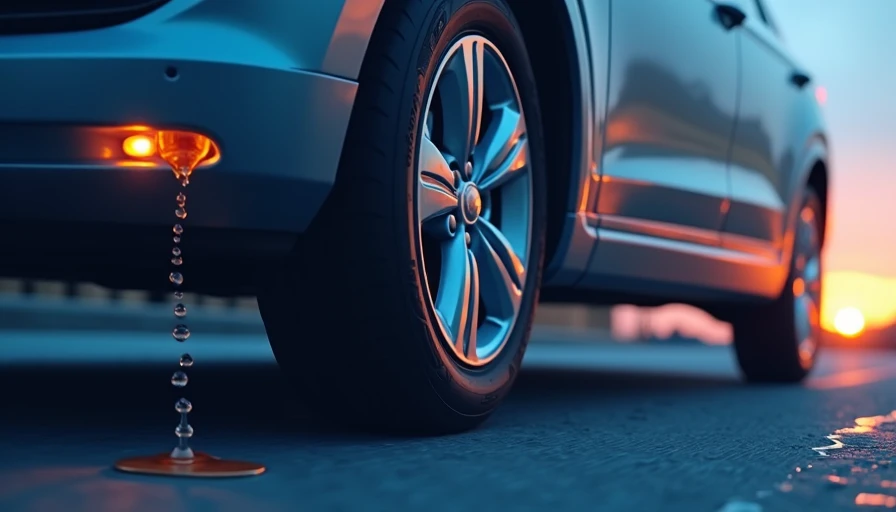
Car Dripping Liquid: Identify the Fluid and Fix the Problem Safely
Car dripping liquid? Learn how to identify oil, coolant, water, brake fluid, and fuel leaks, plus safe checks and when to call a professional.
A car dripping liquid is not automatically a major repair, but ignoring an unfamiliar puddle can turn a small leak into an overheated engine, failed brakes, or a fire risk. The first mistake I see is someone touching the fluid before identifying it. Do not do that. Park on level pavement, let hot components cool, and inspect the location, color, smell, and consistency from a safe distance.
You can do this. Here's the safe, right way. Put a piece of clean cardboard under the engine bay overnight. The position of the drops relative to the front tires, engine, transmission, and exhaust gives you a useful starting point. A puddle is not always directly below the failed seal because air movement and splash can carry fluid along a subframe.
Start with the fluid, not the repair
Clear water with no oily feel is usually condensation from the air conditioner. On a humid summer day, a small puddle near the passenger side of the firewall is normal. Water from the exhaust tailpipe during a cold start is also commonly harmless. It should be thin, odorless, and disappear as it dries.
Engine oil usually looks amber when fresh and dark brown or black when old. It feels slick between gloved fingers and has a petroleum smell. Check the dipstick before driving. If the level is below the safe mark, add the manufacturer-specified oil only long enough to move the vehicle for diagnosis, or arrange a tow if the leak is substantial.
Coolant can be green, orange, pink, blue, or yellow depending on the formula. It often has a sweet smell and a slippery feel. Never open a radiator cap or pressurized expansion tank while hot. A cooling system can remain dangerous for hours after shutdown. A car dripping liquid that appears watery but has bright color or a sweet odor deserves immediate attention.
Transmission fluid is commonly red or brown, though some newer fluids are yellow, blue, or nearly clear. Power-steering fluid, where that system is used, may resemble transmission fluid. Brake fluid is usually clear to light amber and feels less oily than engine oil. It is especially serious because a leak can reduce hydraulic pressure and braking ability.
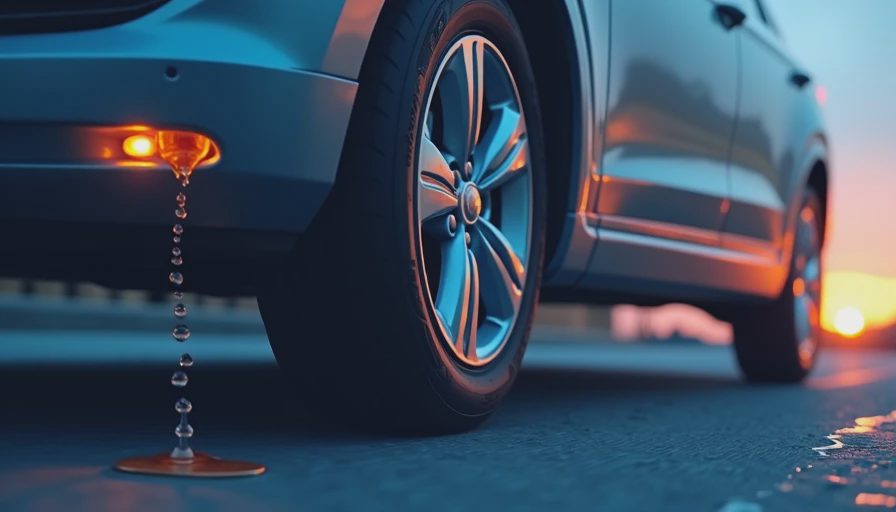
What the puddle location tells you
A car dripping liquid near the front center may be engine oil, coolant, transmission fluid, or plain air-conditioning water. Look upward with a flashlight rather than crawling under an unsupported vehicle. Wetness around the oil pan points toward a gasket, drain plug, or pan damage. Wetness higher on the engine may run downward from a valve-cover gasket, oil filter housing, or timing-cover seal.
Behind a front wheel, inspect the brake hose, caliper, and inner wheel. Do not drive if you see clear or amber fluid near a brake assembly, the brake pedal feels soft, or the brake warning light is on. Near the rear axle, suspect differential oil, fuel, or rear brake fluid. Fuel has a strong gasoline or diesel odor; do not start the vehicle, use a trouble light, smoke, or create sparks. Have it towed.
A wet spot under the middle of the vehicle can come from the transmission pan, cooler lines, or an exhaust condensation pattern. On an electric vehicle, do not assume every leak is harmless. Battery coolant may be present, and damaged high-voltage components require trained service. Orange cables are a stop sign: keep hands away and arrange professional inspection.
Safety First and Tool Check
Safety First: Work outdoors or in a well-ventilated area, set the parking brake, and use wheel chocks. Never rely on a jack alone. If you must raise the vehicle, use a properly rated floor jack and jack stands placed at the manufacturer-approved points. Keep coolant and oil away from pets; both can be poisonous, and coolant can taste attractive to animals.
Tool Check: Gather nitrile gloves, eye protection, a bright LED flashlight, cardboard, paper towels, a tire-pressure gauge, and the vehicle owner's manual. A clean inspection mirror helps you see behind brackets. For a suspected leak, UV dye and the correct lamp can help, but use dye approved for that fluid and vehicle system. Do not use a kitchen paper towel as a substitute for a pressure-test adapter or plug.
You do not need to remove parts just to identify the source. Wipe accessible grime, run the engine only if there is no fuel leak or exposed moving hazard, and watch for fresh wetness. Keep hands, sleeves, hair, and tools away from belts, fans, pulleys, and hot exhaust parts.

Checks you can perform at home
Begin with the fluid levels. Check engine oil on level ground after following the manual's waiting time. Inspect the coolant reservoir only when cold. Check brake fluid against its MIN and MAX marks without opening the hydraulic system. A low reservoir indicates a problem; it is not permission to keep topping it off indefinitely.
Next, inspect common service points. An oil filter that was installed too tightly, a crushed drain-plug gasket, or a loose transmission-pan bolt can leak after recent maintenance. Look for fresh trails, not just the lowest wet point. For a filter or drain plug, use the vehicle-specific torque specification from the service manual. Many drain plugs fall roughly in the 20-to-30 pound-foot range, but that is not a universal specification. Torque to spec — and yes, the spec matters. Over-tightening can strip an aluminum oil pan; under-tightening can allow a dangerous loss of fluid.
Do not seal an oil leak with external silicone, install stop-leak chemicals in a brake system, or mix coolant types based only on color. Those shortcuts can hide symptoms and create a larger repair. If the source is above your comfort level, photograph the area and give the repair shop your observations.
When a car dripping liquid needs a tow
Stop driving immediately for fuel odor, a growing puddle, steam, a temperature gauge above normal, a low-oil warning, a soft brake pedal, or fluid spraying onto the exhaust. A car dripping liquid continuously while parked should not be treated as a minor seep. Place cardboard beneath it only for identification, not as a long-term solution.
A small oil seep might allow a careful trip to a nearby shop after the level is confirmed, but a quart lost in a short drive is a different situation. Coolant loss can overheat an engine in minutes. Brake fluid loss can remove braking pressure without much warning. If the vehicle has overheated, do not pour cold water into a hot radiator; let it cool naturally and call for assistance.
A practical diagnosis example
Suppose you find a car dripping liquid after a grocery trip. The puddle is clear, odorless, and near the passenger-side firewall. The air conditioner was running, and the spot dries without an oily ring. That pattern strongly suggests normal condensation. Now change the facts: the puddle is orange, has a sweet odor, and the temperature gauge is climbing. That is likely coolant, and the correct decision is to shut down and tow the vehicle.
If the spot is dark brown under the front of the engine, check the oil level and inspect for fresh oil around the filter and drain plug. If the fluid is red near the transmission, do not assume it is engine oil. Record the color, smell, location, recent service, and warning lights. Those five details can save diagnostic time and reduce the chance of replacing the wrong part.
A car dripping liquid is a message from the vehicle, not a diagnosis by itself. Identify the fluid, protect yourself, verify the level, and stop before the leak creates a safety problem. When the signs point to fuel, brakes, overheating, high-voltage equipment, or rapid fluid loss, call a qualified technician. The safest repair is the one based on evidence, the correct service information, and a torque wrench used to the actual specification.
Comments
No comments yet — be the first to share a thought.