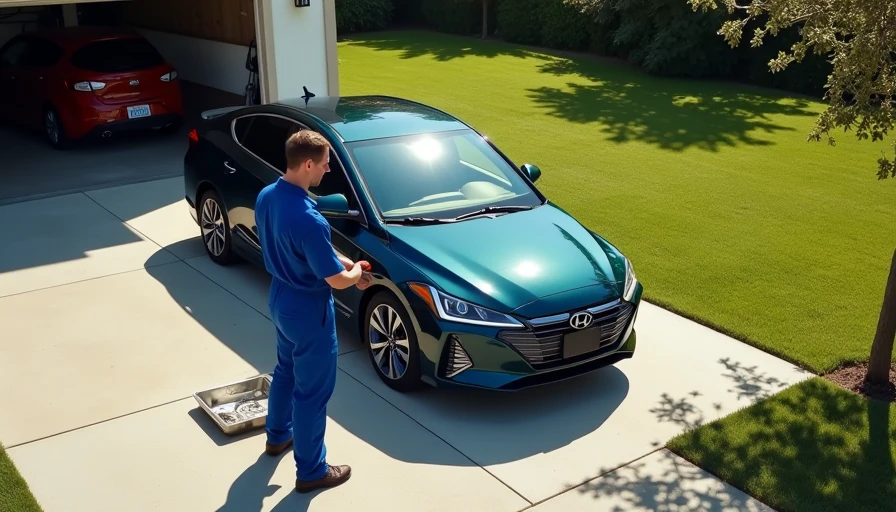
Hybrid Vehicle Oil Change: How to Do It Safely and What to Watch
hybrid vehicle oil change tips for DIY owners: learn the right oil, torque specs, safety steps, and when to call a pro before a costly leak or stripped plug.
A common mistake I see is treating a hybrid as if it never needs engine oil service because the engine does not run all the time. A hybrid vehicle oil change still matters, because the gasoline engine starts cold, stops often, and can trap moisture and fuel in the crankcase. That is the job I want you to understand before you reach for a wrench. You can do this. Here's the safe, right way.
Safety First Before You Start
Safety First: shut the car down completely, remove the key fob from the cabin, and make sure the dash is dark, not in READY mode. On a hybrid, the engine can restart without warning if the computer decides it needs heat or charging, so do not trust the fact that the gas engine is quiet. Park on level ground, set the parking brake, chock the rear wheels, and let the exhaust and oil pan cool enough to touch. If you see orange high-voltage cables, do not open or disturb them. An oil change lives on the low-voltage side of the car, but your hands still need to stay out of anything orange.
Tool Check: you want ramps or jack stands, wheel chocks, a drain pan, the correct oil filter wrench, a ratchet with the right drain-plug socket, nitrile gloves, shop towels, a funnel, and the exact oil spec from the owner's manual. Many hybrids call for 0W-16 or 0W-20 full synthetic. I also like a new drain-plug crush washer if the vehicle uses one. Torque to spec and yes, the spec matters. A typical drain plug lands somewhere around 20 to 30 lb-ft, and many cartridge filter caps are around 18 to 22 lb-ft, but always verify the number for your engine. Strip a drain pan or filter cap once and the cheap oil change becomes a repair bill.
For cost context, a DIY service often lands around $35 to $75 in oil, filter, and washer costs, while a quick-lube shop may charge $70 to $120 and a dealer more. The exact price depends on oil capacity and whether your filter is a simple spin-on or a cartridge style with an O-ring.
How a hybrid vehicle oil change differs from a regular service
A hybrid vehicle oil change is not hard, but it does ask for better timing and better attention to detail. The engine may run fewer miles, yet it still sees cold starts, short warm-up periods, and stop-and-go use. That is why time matters as much as mileage. A car that only racks up 6,000 miles a year can still need annual service if the manual says 12 months or if the driving is all short hops.

Here's what I see go wrong most often: owners assume low mileage means clean oil. In the real world, condensation builds up, fuel can thin the oil, and the additive package in the oil still wears out with age. This is especially true on hybrids that spend a lot of time shutting the engine off at lights and in parking lots. If your plug-in hybrid does a lot of electric-only commuting, follow the time interval just as closely as the mileage interval.
The other difference is filter access. Some models, like certain Toyota and Honda hybrids, use a cartridge filter in a housing on top or near the front of the engine, which is cleaner than a spin-on can but demands the right cap wrench and careful torque. Others tuck the drain plug behind an undertray, so patience matters more than muscle. A hybrid vehicle oil change is really about respecting the layout and not rushing the first five minutes.
Step-by-step service without the guesswork
Start with the engine slightly warm, not hot enough to burn you. Open the hood, confirm the oil fill cap and dipstick location, then get the car safely on ramps or stands. Remove any splash shield that covers the drain plug, and keep the fasteners organized. Once the drain pan is in place, crack the drain plug loose and let the oil fully drain. I usually give it ten minutes while I inspect the plug threads and washer. If the threads are damaged, stop and correct that before refilling.
On a spin-on filter, wipe the sealing surface clean, prefill only if the filter mounts vertically, and spin the new filter on until the gasket touches, then tighten per the filter instructions. On a cartridge filter, replace the O-ring, lubricate it with fresh oil, and torque the housing cap to spec. Many housings land around 18 to 22 lb-ft. For the drain plug, a common range is 20 to 30 lb-ft, but your engine may differ. Do not guess. Do not reef on it with a breaker bar.

Refill with the exact capacity listed in the manual, then add about three-quarters of the final amount, start the engine, let it run briefly, shut it down, and wait a couple of minutes before checking the dipstick. Top off in small steps. The goal is the upper mark, not the highest number in the bottle. A quart too much can cause foaming, leaks, and a messy underside.
Inspect the drain plug, filter, and filter housing for seepage. If the car has an oil life monitor, reset it only after the level is correct and you have verified no leaks. That way the reminder matches the actual service.
When to stop and call a pro
Stop and call a pro if the drain plug is rounded off, the filter housing is cracked, the undertray will not come off without breaking clips, or the oil looks milky, glittery, or smells strongly of coolant. Those are not normal maintenance issues. They can point to a gasket failure, a cooling problem, or engine wear that deserves diagnosis. The same goes for a hybrid system warning light, not just a check engine light, because that changes the scope from simple maintenance to actual troubleshooting.
I also tell people to step back if the service location is too tight to work safely. Some hybrids have exhaust and inverter components crowded around the engine bay, and that is not the place to improvise. Paying a reputable independent shop for one oil change is cheaper than learning on a stripped housing or cross-threaded plug.
A smart maintenance rhythm for hybrid owners
For most drivers, the best rhythm is simple: use full synthetic oil, follow the time interval in the manual, and keep records of date, mileage, oil grade, and filter brand. If the engine takes 0W-16, buy 0W-16. If the manual allows 0W-20, do not assume a thicker oil is better. Toyota, Honda, Mobil 1, Valvoline, Castrol, and Pennzoil all make widely available products that fit many modern hybrids, but the label on the bottle should match the spec in your owner's manual.
A hybrid vehicle oil change should also be part of a broader inspection. Look at the coolant level, brake fluid color, tire wear, and the underside for seepage while the car is already in the air. That extra five minutes catches problems early. If you keep the job orderly and use the right parts, you will spend less over time than you would on rushed service and preventable repairs.
You can do this. Here's the safe, right way. Treat a hybrid vehicle oil change like a maintenance job that rewards patience, clean work, and the discipline to torque to spec instead of guessing.
Comments
No comments yet — be the first to share a thought.