Spring rain can double your crash risk—5 habit changes that keep you out of the body shop
This guide turns Mercury Insurance’s wet-road warning into practical steps—slowing down, using headlights, avoiding standing water, and checking tires—to reduce rain crash risk.
Spring rain can double your crash risk—5 habit changes that keep you out of the body shop
Why This Matters (cost/safety/longevity payoff)
Here’s what I see go wrong most often: drivers treat rain like “normal driving, just wetter.” Then they’re shocked when the car won’t stop, the tires skate across a puddle, or they can’t see a dark vehicle ahead until it’s too late.
A small weather shift can turn into a big repair bill fast. Wet pavement means reduced traction (less tire grip on the road), longer stopping distances, and limited visibility—three ingredients that stack the odds against you. And the numbers are blunt: the Federal Highway Administration reports nearly 1.2 million crashes each year on wet pavement, making up roughly 75% of all weather-related collisions.
The payoff is simple: adjust a few habits and you dramatically cut the chances of a crash, an injury, or a costly insurance claim.
What You Need to Know (specs, types, intervals)
What changes when the road is wet
- Reduced traction: Water acts like a lubricant between the tire and the pavement.
- Longer stopping distances: Less grip means your brakes can only do so much before the tires slide.
- Limited visibility: Rain, spray, and low light hide hazards.
The most dangerous time window
The risk is often highest at the start of a storm, especially the first 10 to 15 minutes of rainfall. Why? Oil and debris that have built up on the roadway rise to the surface and create especially slippery conditions before they get washed away.
Your “rain readiness” checklist
Safety First
- If conditions are severe, the safest decision may be to delay the trip or pull off somewhere safe until visibility improves.
- If you can’t see well enough to drive calmly and predictably, you can’t drive safely—period.
Tool Check (for driving, not wrenching)
- Working headlights (not just daytime running lights)
- Tires in good condition with proper tread depth and correct tire pressure
- A mindset shift: smooth inputs and more following distance
How It Works (what to do and why it works)
1) Slow down and increase following distance
Wet pavement reduces tire grip, making it harder to stop quickly. More following distance buys you time to brake gently and stay in control instead of panic-stabbing the pedal.
How to do it right
1. Reduce speed earlier than you normally would—especially approaching intersections and curves.
2. Add extra space between you and the vehicle ahead to account for longer braking distances.
3. Think “calm and early” with braking, not “late and hard.”
Pro Tip: The first 10 to 15 minutes of rainfall are the slipperiest. That’s the moment to back off the most, even if traffic around you hasn’t gotten the memo.
2) Turn on headlights—not just daytime running lights
This is a big one. Daytime running lights may help you see, but headlights help other drivers see you in low-light and rainy conditions. In rain, visibility isn’t just about what’s in front of your hood—it’s about being seen from the rear and the sides too.
How to do it right
1. Switch your headlights on as soon as rain starts (or sooner if the sky is dark).
2. Don’t assume “auto” settings are perfect—verify your lights are actually on.
3) Avoid sudden braking or sharp turns
On slick pavement, abrupt inputs overwhelm available traction. Smooth, gradual movements help maintain traction and reduce the risk of skidding or hydroplaning.
How to do it right
1. Brake earlier and more gently.
2. Steer with gradual inputs—no jerky corrections.
3. If you feel the car start to slide, your goal is to reduce demands on the tires: ease off aggressive inputs and regain smooth control.
4) Watch for standing water (hydroplaning risk)
Even shallow water can cause hydroplaning—when your tires lose contact with the road surface and ride on top of the water. When that happens, steering and braking effectiveness drop sharply because the tire isn’t truly connected to the pavement.
How to do it right
1. Scan ahead for pooling water, especially in ruts and low spots.
2. Be extra cautious in heavy downpours and on roadways prone to pooling water.
3. If you can safely avoid standing water, do it—don’t drive through it “just to see.”
Pro Tip: Water often collects where tires have worn grooves into the lane. If you notice the car following ruts, that’s a clue you’re in a spot that can pool.
5) Check tires regularly (tread depth and tire pressure)
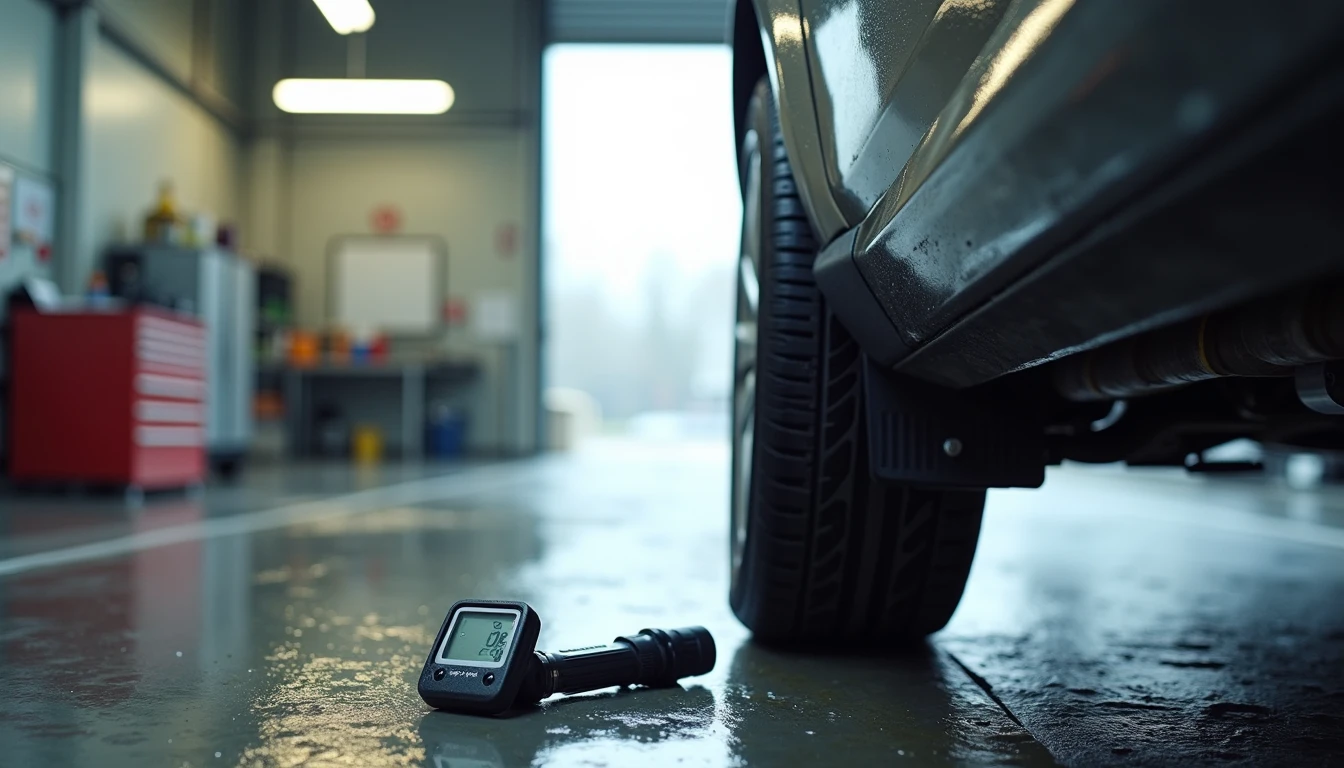
Tires are your only contact with the road. Proper tread depth helps channel water away so rubber can meet pavement. Correct tire pressure keeps the tire’s shape working as designed for grip and stability.
How to do it right
1. Check tires regularly—don’t wait for the first storm.
2. Maintain correct tire pressure and keep an eye on tread condition.
Common Mistakes (myths, pitfalls, warnings)
- Mistake: Driving the same speed because “I have good brakes.” Brakes don’t create traction—tires do. Wet roads reduce grip, so stopping distances increase.
- Mistake: Relying on daytime running lights. The guidance is clear: turn on headlights, not just DRLs, to improve visibility and help other drivers see you.
- Mistake: Sudden pedal and steering inputs. Quick braking or sharp turns can break traction and start a skid.
- Mistake: Underestimating shallow water. Even shallow standing water can trigger hydroplaning.
- Mistake: Ignoring tire basics. Worn tread and incorrect tire pressure make wet handling worse—sometimes dramatically.
Safety First: If rain is heavy enough that you’re tense, white-knuckled, or you can’t see well, that’s your sign to slow down further or find a safe place to wait it out. Arriving late beats not arriving.
Bottom Line (summary, recommended action)
Rain isn’t “business as usual.” Wet pavement changes the physics: less traction, longer stopping distances, and reduced visibility—especially in the first 10 to 15 minutes of rainfall when oil and debris float to the surface. Slow down, add following distance, use headlights, keep inputs smooth, avoid standing water, and stay on top of tire condition. You can do this—just do it deliberately.
Comments
No comments yet — be the first to share a thought.