
Essential Tools for DIY Car Maintenance: Build a Safer, Smarter Starter Kit
Essential tools for DIY car maintenance start with a safe jack, torque wrench, sockets, and scan tool. Build the right kit and work smarter.
A lot of beginners think **essential tools for diy car maintenance** means buying a giant 300-piece mechanic set and hoping for the best. That is how people waste money, round off fasteners, and take safety shortcuts. In my shop, I teach the opposite approach: buy the tools that let you do common jobs correctly, verify your work, and stop before a simple service turns into a repair bill. You can do this. Here's the safe, right way.
Start with safety gear before you buy more wrenches
Here’s what I see go wrong most often: a driver buys shiny hand tools but skips the gear that keeps the car stable and the body protected. The first items in your kit should be a quality floor jack, jack stands, wheel chocks, safety glasses, nitrile gloves, and a good LED work light. If you work on the ground, these are not extras.
**Safety First:** Never rely on a hydraulic jack alone to hold a vehicle. Lift on approved jacking points, set jack stands on solid ground, chock the wheels that stay on the ground, and give the vehicle a gentle shake test before you slide under it.
A 2-ton or 3-ton low-profile floor jack handles most cars and crossovers well. Pair it with jack stands rated appropriately for the vehicle. A compact fire extinguisher is also smart when you are working around fuel, electrical wiring, or a hot engine bay.
**Tool Check:** floor jack, two or four jack stands, wheel chocks, eye protection, gloves, LED light, drain pan, shop towels, and a creeper or foam pad.
If your lug nuts come off during a tire rotation, torque them back to spec with the vehicle on the ground. Most passenger cars land somewhere around 80 to 100 lb-ft, many trucks higher, but torque to spec — and yes, the spec matters.

The hand tools that cover most maintenance jobs
Once safety gear is handled, build around a solid socket and wrench set. For most modern vehicles in the U.S., metric tools do the heavy lifting. A 3/8-inch drive ratchet, metric sockets from 8 mm to 19 mm, deep sockets, extensions, and combination wrenches will carry you through battery service, filter housings, splash shields, and many underhood jobs.
Add a 1/2-inch breaker bar for stubborn fasteners and a 1/4-inch drive set for lighter work in tight spaces. A set of screwdrivers, trim tools, needle-nose pliers, slip-joint pliers, locking pliers, and a magnetic pickup tool belong in the same drawer.
Skip the bargain-bin tools that fit loosely and chew up bolt heads. Mid-tier brands from Tekton, GearWrench, Husky, Craftsman, or Quinn are usually a better starter value than the cheapest set on the shelf. If you do a lot of suspension or brake work, impact-rated sockets are worth adding later.
For a battery terminal, many clamps are in the 5 to 7 lb-ft range, while smaller fasteners on engine covers and air boxes may be closer to 7 to 10 lb-ft. That is exactly why one giant “good and tight” guess is not a method.
Don’t skip measuring tools: torque wrench, tire gauge, and scan tool
The most overlooked items on any list of **essential tools for diy car maintenance** are the tools that confirm the job was done right. A click-type torque wrench is number one. I recommend a 3/8-inch torque wrench for common underhood and brake fasteners, then a 1/2-inch model later for wheels and larger chassis work.
**Safety First:** Always set a torque wrench back to its storage setting after use, and never use it as a breaker bar. That is how calibration gets ruined.
A digital tire pressure gauge is another must-have. Proper tire pressure affects handling, braking, tread life, and fuel economy. Set pressure when the tires are cold and follow the driver-door placard, not the maximum number molded into the tire sidewall.
Then add an OBD-II scan tool. Even a basic unit can read and clear codes, display live data, and help you verify whether a check engine light issue is simple or something that needs diagnosis. If a code points to misfire, ABS faults, or airbag systems, that is often the point where a DIYer should slow down and possibly call a pro.
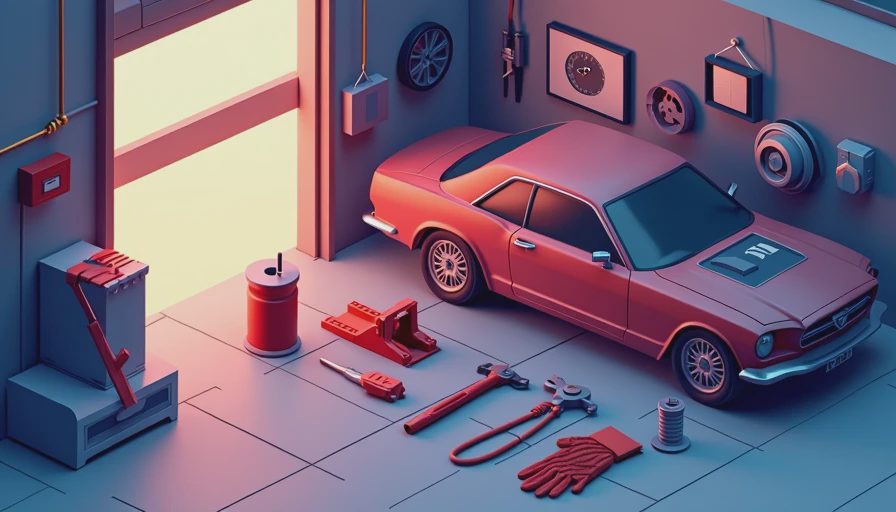
Fluids, service tools, and the gear for routine jobs
If you want to handle the jobs that save real money, your kit needs fluid-service basics. An oil filter wrench, funnel set, fluid transfer pump, drain pan with a sealed lid, measuring container, and disposable absorbent pads make oil changes and fluid checks much cleaner and safer.
For wheels and brakes, keep a breaker bar, lug socket, brake cleaner, bungee cord or caliper hanger, and a wire brush. Never let a brake caliper hang by the hose. Support it. On many passenger vehicles, wheel lug torque is commonly around 80 to 150 lb-ft depending on platform. Caliper bracket bolts are often much tighter than caliper slide pins, so get the exact spec before you start.
**Tool Check:** oil filter wrench sized for your vehicle, funnel, drain pan, socket for drain plug, crush washers or drain plug gasket, tire gauge, inflator, and torque wrench.
For spark plugs, use a proper spark plug socket and start threads by hand. Typical spark plug torque can range from roughly 10 to 20 lb-ft depending on plug size and cylinder head material. Cross-thread an aluminum head once and you will remember that lesson forever.
Build your kit in stages and know when to stop
The best **essential tools for diy car maintenance** kit is not the biggest one. It is the one that matches the work you actually do. Stage one should cover tire pressure checks, battery service, air filters, wiper blades, and oil changes. Stage two adds brake service tools, a better scan tool, and a second torque wrench. Stage three might include a multimeter, serpentine belt tool, coolant vacuum fill tool, or cordless impact if you are doing frequent repairs.
Here’s the why before the how: every tool should either improve safety, prevent damage, or help you verify the repair. If it does none of those things, it can wait.
Also know your stop point. Rusted brake lines, suspension springs, high-voltage hybrid systems, airbag faults, and anything requiring a lift and major support equipment are not beginner jobs. There is no shame in handing that work to a qualified shop.
A smart starter setup usually costs far less than a few dealership visits for basic maintenance, and it keeps paying you back. Start with quality basics, torque to spec, and work methodically. That is how **essential tools for diy car maintenance** turn from a shopping list into real confidence in your own garage.
Comments
No comments yet — be the first to share a thought.