Subaru Forester Control Arm Replacement Cost: What Drivers Actually Pay
subaru forester control arm replacement cost explained: typical parts, labor, alignment, and rust-belt surprises that push the bill higher.
A clunk over speed bumps does not always mean you need struts. On a Forester, worn bushings, a loose ball joint, or a bent arm can make the front end feel sloppy, and that is why the subaru forester control arm replacement cost catches owners off guard. I see a lot of people spend money on the wrong suspension part first, then come back after the noise is still there. You can do this. Here's the safe, right way: figure out what failed, price the right part, and do the alignment at the same time so you do not pay twice.
What usually gets replaced on a Forester
On most Foresters, the front lower control arm is sold as a complete assembly with bushings and the ball joint already installed. That matters because a complete arm saves labor time and gives you a fresh set of wear points in one shot. If the ball joint is separate on your year, the labor can climb because the shop has to press or service the joint separately.
Here's what I see go wrong most often: a driver buys one cheap arm, swaps only one side, and skips the alignment. The steering wheel ends up off-center, the tires wear unevenly, and the car still wanders on the highway. On a practical level, the subaru forester control arm replacement cost includes the arm itself, labor, and usually a front alignment. If the tech finds torn sway bar links, damaged tie rod ends, or a seized cam bolt, the bill can rise fast.
The price range I see in the shop
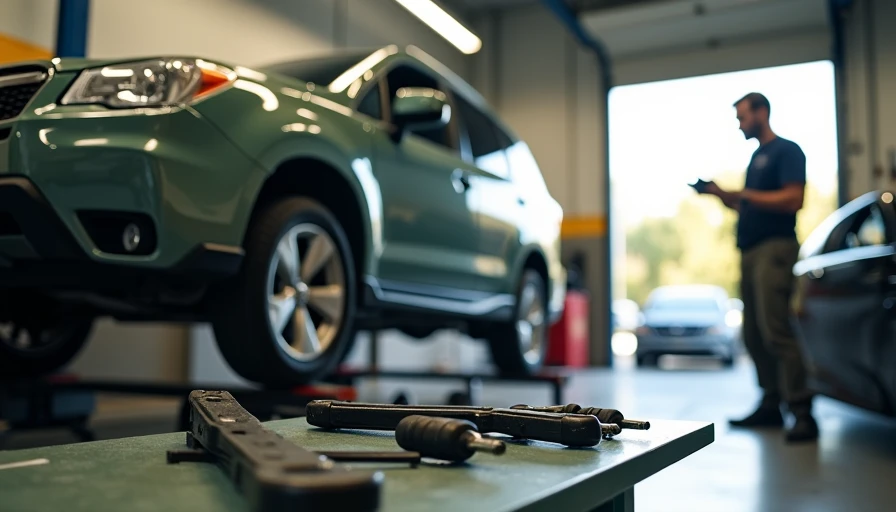
The subaru forester control arm replacement cost usually lands in a broad range because parts quality and rust level change the job. For a common front lower arm replacement, I expect aftermarket parts to run about $120 to $250 per side, while OEM Subaru parts often sit closer to $250 to $450 per side. Labor commonly takes 1.5 to 2.5 hours per side at an independent shop, and dealership labor rates can push higher. Add a front alignment for another $100 to $180, and a realistic total for one side often lands around $400 to $800.
If both front arms are due, the bill can climb into the $900 to $1,400 range pretty quickly. That sounds steep, but it is still cheaper than chewing through a set of tires at $700 to $1,000 or dealing with unstable steering on a winter road. A shop in the Rust Belt may spend extra time freeing hardware, which can add a few hundred dollars in labor if bolts are badly corroded.
IMAGE_1
The part choice matters too. A low-price aftermarket arm from a chain store may get the vehicle back on the road, but the bushings may not last as long as a higher-grade OE-style replacement. For a daily driver that sees salt, potholes, and long highway miles, I usually lean toward a quality arm from a known supplier rather than the cheapest box on the shelf. That is the difference between a repair that lasts a couple of seasons and one that stays tight for years.
Why rust, labor, and alignment change the bill
The biggest surprise is not usually the control arm itself. It is the hardware around it. A seized rear bolt, a frozen camber washer, or a stripped pinch point can turn a two-hour job into an all-day fight. If the arm has been on the car for 100,000 miles in Minnesota, Michigan, or upstate New York, the fasteners may come out clean only after heat, penetrant, and patience.
Alignment also matters more on this job than people think. The lower arm sets wheel location, and even a small change can affect toe and camber. That is why a shop should align the car after the repair, not as an optional add-on. If the steering wheel is crooked after the job, or the tires start feathering on the edges, the front geometry was not reset correctly.
This is also where a quote can look low on paper and expensive at checkout. One shop may quote just the arm, another may include alignment, shop supplies, and a road test. When you compare estimates, make sure you are looking at the same scope. Otherwise the cheapest line item is not really the cheapest repair.
Safety First: tools, torque, and when to stop
Tool Check: floor jack, two jack stands, wheel chocks, breaker bar, torque wrench, rust penetrant, paint marker, and the correct sockets for your Forester's fasteners. If you are doing this yourself, never trust the jack alone. Chock the rear wheels, lift on solid points, and support the car on stands before you put a hand near the suspension.
Torque to spec, and yes, the spec matters. Subaru uses different values by model year and fastener, so check the factory service data for the exact control arm bolts, ball joint hardware, and any pinch bolt involved. Many Forester wheel lug nuts are 88.5 ft-lb, and I always torque them in a star pattern after the wheel goes back on. If a bolt starts to round, the knuckle is cracked, or the ball joint taper will not release cleanly, stop and call a pro. That is cheaper than breaking a knuckle or slipping with a pry bar.

How to compare quotes before you hand over the keys
When I look at estimates for the subaru forester control arm replacement cost, I want three things on paper: the exact side being replaced, whether the arm is complete or pieced together, and whether the quote includes alignment. If one shop lists a complete OEM arm with alignment for $720 and another lists a bare aftermarket arm for $540 before alignment, the first quote may actually be the better value.
Ask whether the shop inspected both sides. On a lot of Foresters, the opposite arm is not far behind if the car has high mileage or heavy rust exposure. If the bushings on both sides are cracked and the tires are already wearing unevenly, doing both front arms at once can save labor and reduce repeat alignment charges. I have seen owners save $150 to $300 in labor by combining the work.
A good quote also tells you if the tech expects extra time for rusted hardware. That is not a scare tactic; it is honest billing. If the estimate is missing alignment, hardware, or labor hours, ask for the full picture before approving the repair.
The short version on value
The subaru forester control arm replacement cost is not a small-ticket repair, but it is manageable when you understand what is actually worn out. For one side, most drivers are looking at a few hundred dollars, and for both sides plus alignment, the total can move into four figures. The smart move is to diagnose the clunk first, choose a quality part, and make sure the alignment is part of the plan.
If you are a DIY owner with solid tools and a rust-free vehicle, the job is doable. If the hardware is crusty, the ball joint is stubborn, or you do not have a torque wrench and stands, pay a qualified shop and let them handle the fight. You can do this. Here's the safe, right way.
Comments
No comments yet — be the first to share a thought.