
Hybrid Car Maintenance vs Regular: What Changes, What Doesn't, and What Costs Less
hybrid car maintenance vs regular: see what changes, what costs less, and which services stay the same for oil, brakes, tires, coolant, batteries, and...
A lot of drivers assume hybrid car maintenance vs regular is mostly about the battery. That is too simple. A hybrid still has an engine, oil, tires, brakes, filters, coolant, and a 12-volt battery. What changes is how hard each part works and how often certain systems get used. I tell owners to compare service item by service item, not by badge. That is the cleanest way to budget for oil changes, brake work, and the occasional diagnostic bill without guessing.
What actually changes under the hood
In hybrid car maintenance vs regular, the biggest difference is duty cycle. A Toyota Prius, Honda Accord Hybrid, or Ford Escape Hybrid can spend part of the drive on electric power, so the engine idles less and sees fewer low-speed miles. That can reduce wear on some parts, but it adds inverter hardware, high-voltage cables, and extra cooling circuits on many models.
That means the basics still matter. Oil changes still matter. Tires still matter. Cabin filters still matter. The difference is that a warning light on a hybrid can point to a 12-volt battery, a coolant fan, or a battery management fault, not just a simple engine issue. Safety First: never touch orange high-voltage wiring unless you are trained and equipped for it.

Where hybrids usually save money
The place hybrids often save money is brake life. Regenerative braking lets the motor slow the car before the friction brakes finish the stop, so pads and rotors can last longer. In city traffic, I have seen Prius brake pads go well past 100,000 miles when the driver is smooth. A gas sedan of similar size often needs brake work sooner.
That is the main reason hybrid car maintenance vs regular can tilt in the hybrid’s favor. Less idling also means less wasted fuel and less engine runtime. On a delivery route or in stop-and-go commuting, that can add up over years. The catch is that the savings are not automatic. Neglect the coolant, ignore tire wear, or let a small warning light sit for months, and the repair bill can climb fast.
That said, hybrids do not get a free pass. Rear brake calipers can still seize, tires can still feather, and a weak 12-volt battery can make the car act haunted. So when a hybrid starts acting strange, think system by system, not just battery by battery.
Where regular cars stay simpler
A conventional car has fewer layers between the driver and the repair bill. No traction battery. No inverter. No orange service disconnect. On many gas cars, that makes diagnosis simpler and labor cheaper, especially in smaller shops that see more conventional vehicles than hybrids.
In hybrid car maintenance vs regular, the regular car wins on simplicity if you want the fewest special systems to think about. A normal Corolla or Civic still needs maintenance, but the repair tree is usually shorter. When a check-engine light comes on, a tech has fewer system interactions to sort through. The downside is more brake wear, more engine run time, and more fuel burned in traffic. So the regular car may be easier to understand, while the hybrid may be cheaper to operate.
The maintenance items that stay the same
Most owners focus on the battery and forget the shared items. In hybrid car maintenance vs regular, these are the services that decide whether ownership feels easy or annoying. Oil and filter service still happen on time. Tires still need rotation and pressure checks. Air filters still affect fuel economy and HVAC performance. Brake fluid still ages with time, not miles, and coolant still loses protection as it gets old.
Tool Check: a tire gauge, a flashlight, a quality scan tool, and the owner’s manual cover most DIY maintenance. A basic oil service might run $40 to $80 for conventional oil and $70 to $130 for synthetic, depending on the shop and market. Brake work can swing from a couple hundred dollars for pads only to $600 or more if rotors and sensors are involved. Those ranges are normal, and they explain why maintenance records matter more than marketing claims.
A mileage-based routine that works
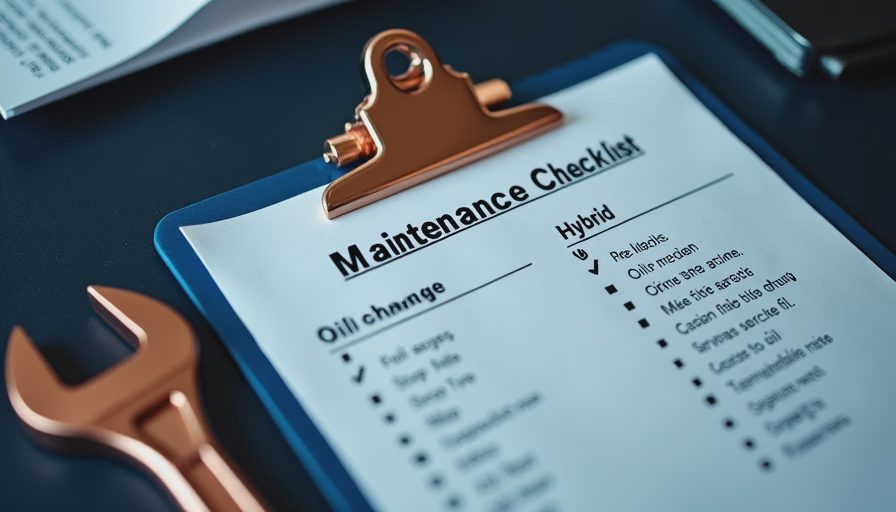
Here is the routine I use when I am comparing hybrid car maintenance vs regular for an owner who wants fewer surprises. Check engine oil every fuel stop or every couple of weeks. Rotate tires around 5,000 to 7,500 miles unless the manual says otherwise. Replace the cabin air filter when airflow drops or around 15,000 to 30,000 miles. Inspect the engine air filter at the same time.
At 30,000 to 50,000 miles, look at brake fluid condition, coolant level, and 12-volt battery health. At 60,000 to 100,000 miles, many hybrids are due for spark plugs, coolant service, or transmission fluid service depending on the model. A Toyota hybrid may go a long time between major drivetrain items, while a Ford or Honda hybrid can have a different schedule. That is why the owner’s manual wins every time.
A scan for stored codes before parts ordering is cheap insurance and often saves a Saturday.
When to DIY and when to call a pro
You can do a lot yourself on a hybrid if you stay on the low-voltage side. Tires, filters, fluids, wiper blades, and visual checks are fair game for a careful owner. The point where I want you to stop is when the car shows a hybrid warning light, a battery cooling fan issue, a charging fault, or any sign of orange-cable damage after a collision or flood. That is true in hybrid car maintenance vs regular because the safety risk is different, not because the owner is incapable.
If the repair involves the traction battery, inverter, or high-voltage interlock system, let a qualified technician handle it. I have seen too many people chase a simple-looking code and turn a manageable problem into a tow bill. That is not a badge of shame. That is smart ownership. You can do this. Here's the safe, right way.
Comments
No comments yet — be the first to share a thought.