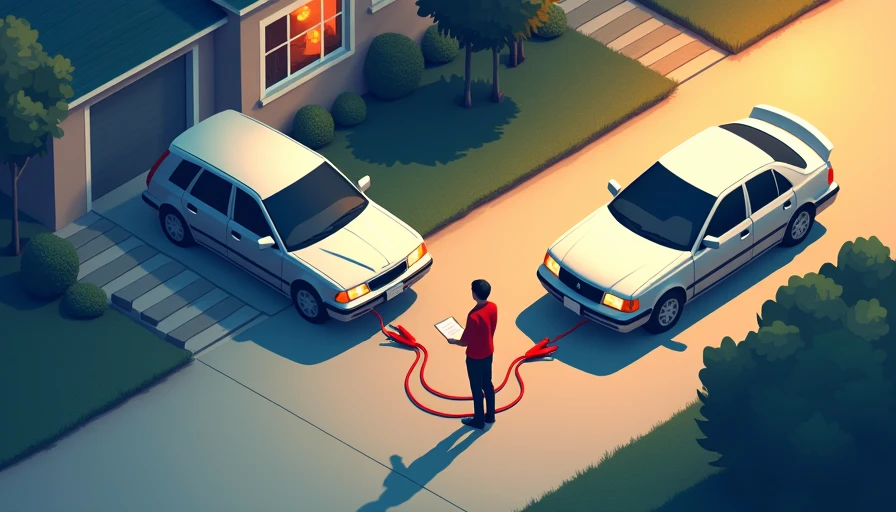
Car Battery Wont Jump: A Safe, Step-by-Step Diagnosis
Car battery wont jump? Follow this safe diagnostic guide to check cables, battery health, starter, and charging system before calling for help or buying parts.
A car battery wont jump situation usually means the problem is not simply a dead battery. You may have poor cable contact, a failed battery, a damaged starter circuit, or an alternator that drained the battery in the first place. I have seen drivers keep cranking and swapping jumper cables while a loose terminal was sitting in plain sight. You can do this. Here's the safe, right way.
Safety First Before Testing Anything
Park both vehicles on solid, level ground, set both parking brakes, and turn off the ignitions. Keep the vehicles from touching each other. Wear eye protection, remove loose jewelry, and keep cigarettes, flames, and sparks away from the battery. A conventional lead-acid battery can release explosive hydrogen gas, especially while charging.
Do not attempt a jump if the battery case is cracked, badly swollen, leaking fluid, or frozen. A frozen battery can burst when connected to a charger or donor vehicle. Hybrid and electric vehicles also require special procedures; do not use their high-voltage battery system as a jump source. Use the 12-volt jump points described in the owner's manual, or call roadside assistance.
Tool Check: You need a quality set of jumper cables with heavy-gauge wire, safety glasses, a flashlight, a digital multimeter, and a 10-millimeter wrench for many battery terminals. A battery terminal brush is useful. Do not guess at terminal polarity, and do not use a metal tool to bridge the positive terminal to the body.
Inspect the Battery and Cable Connections
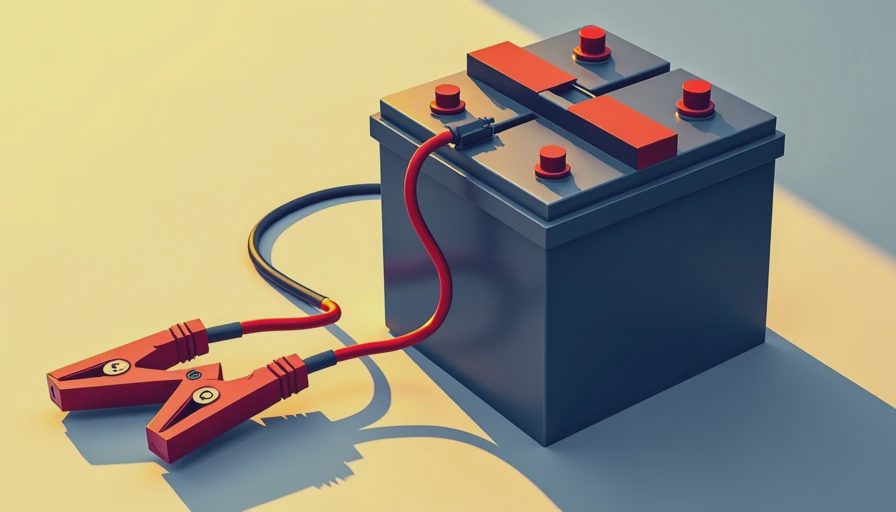
Start with the simple visual inspection. The positive terminal is normally marked with a plus sign and often has a red cover. The negative terminal is marked with a minus sign and connects to the engine or body ground. Look for white, blue, or green corrosion around the posts, loose clamps, broken cable strands, and a ground cable that is loose where it bolts to the engine or body.
A clamp that rotates by hand is not making reliable electrical contact. With the ignition off, tighten the terminal fastener enough to secure the clamp without crushing the lead terminal. Many small battery terminal fasteners are tightened around 5 Nm, or about 44 inch-pounds, but the vehicle service manual is the authority. Torque to spec — and yes, the spec matters. Over-tightening can distort the terminal or damage the battery post.
Clean corrosion with a terminal brush after disconnecting the negative cable first, then the positive cable. Reconnect in reverse order: positive first, negative second. Do not assume a clean-looking clamp is electrically sound; corrosion can hide between the clamp and post.
Connect the Jumper Cables Correctly
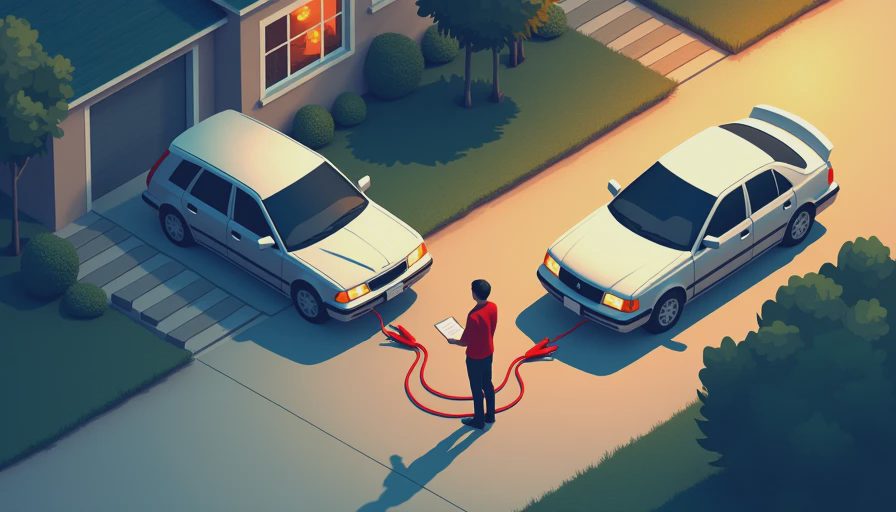
If the car battery wont jump because the connection is poor, correct cable placement can solve the problem. Put the donor vehicle close enough for the cables to reach, but do not allow the vehicles to touch. Both vehicles should be off before connecting.
Connect the red cable to the disabled vehicle's positive terminal. Connect the other red clamp to the donor vehicle's positive terminal. Attach the black cable to the donor vehicle's negative terminal. Attach the remaining black clamp to a clean, unpainted metal point on the disabled vehicle's engine block or chassis, away from the battery and moving belts.
That final ground connection is intentional. It keeps a possible spark away from battery gases and often provides a better ground than a rusty negative terminal. After confirming every clamp is secure, start the donor vehicle and let it run for three to five minutes. Then try the disabled vehicle for no more than about five seconds at a time. Wait at least 30 seconds between attempts.
If the engine turns slowly but does not start, stop repeated cranking. A jump-start cannot fix an empty fuel tank, a failed fuel pump, a bad ignition system, or an engine immobilizer problem. If there is no response at all, continue with testing instead of holding the key repeatedly.
Test Battery Voltage and Starting Behavior
A rested, fully charged 12-volt battery commonly measures about 12.6 volts with the engine off. Around 12.4 volts indicates partial charge, while a reading near 12.0 volts is deeply discharged. These numbers are useful clues, not a complete battery test. A weak battery can show acceptable voltage and still collapse under starter load.
Set the multimeter to DC volts and place the red probe on positive and the black probe on negative. Have an assistant turn the key to START while you watch the meter. If voltage drops below roughly 9.6 volts during cranking at moderate temperature, the battery may have an internal failure or insufficient charge. Cold weather can reduce available battery power, so a borderline battery often fails first on a freezing Minneapolis morning.
If the meter stays near 12 volts but the starter does nothing, inspect the starter fuse, relay, neutral-safety switch, and battery cables. Try starting in Neutral if the vehicle has an automatic transmission, while keeping your foot firmly on the brake. A single heavy click can point toward a starter solenoid or poor high-current connection.
Check the Alternator After the Engine Starts
When the car battery wont jump but the engine runs with assistance, measure charging voltage at the battery. Most conventional vehicles show approximately 13.5 to 14.7 volts with the engine running, although smart charging systems can vary their output. Turn on headlights and the blower motor, then watch for a major voltage drop or a battery warning light.
A reading close to resting battery voltage while the engine runs suggests the alternator, drive belt, wiring, or charging control system needs diagnosis. Do not disconnect the battery while the engine is running to “test” the alternator. That old trick can damage electronic modules and is not a valid modern test.
After a successful start, drive only as far as necessary to reach a safe repair location. A short drive may not recharge a deeply discharged battery. Use a proper smart charger when possible, then have the battery load-tested. Many parts stores offer this test, but a replacement battery will not solve an alternator fault that keeps draining it.
When to Stop and Call a Professional
If the car battery wont jump after clean, correctly placed cables and a known-good donor vehicle, stop guessing. Call for help when the battery is swollen or leaking, cables become hot or smoke, sparks continue, the starter only clicks repeatedly, or the engine will not crank after several controlled attempts. Heat at a cable connection indicates high resistance and can damage insulation or start a fire.
A technician can perform a conductance or load test, voltage-drop tests across the positive and negative cables, and a starter-current test. Voltage-drop testing is especially valuable because a cable can look perfect while failing under load. A typical diagnosis may cost roughly $50 to $150, while a battery commonly costs $120 to $250 installed, depending on size, warranty, and vehicle requirements.
Record the battery's installation date, group size, and cold-cranking-amp rating before buying a replacement. Match the manufacturer's specification rather than choosing the cheapest battery on the shelf. If your vehicle has battery monitoring or start-stop technology, replacement may also require a battery registration procedure.
The safest answer to a car battery wont jump problem is a methodical diagnosis, not more cranking. Inspect first, connect carefully, measure voltage, and identify why the battery went flat. That approach protects your electronics, your hands, and your wallet.
Comments
No comments yet — be the first to share a thought.