THE COMPLETE DRIVER'S GUIDE TO CAR DASHBOARD WARNING LIGHTS
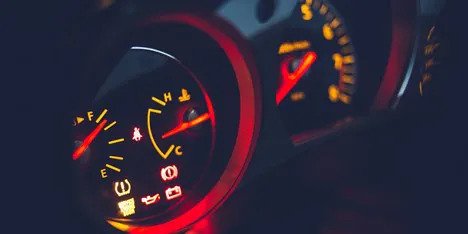
Each time you turn the key in your car, the dashboard comes alive with a burst of illumination. A collection of green, blue, red, yellow, and orange symbols flickers on briefly, confirming that every system is functioning as it should.
But what happens when one of those warning lights refuses to go out? That persistent glow is your car's way of signaling that something may need attention.
Your car's diagnostics system exists to keep you safe and help you avoid more serious performance problems down the road. To take full advantage of it, though, you need to understand what each signal actually means.
The sheer number of car dashboard warning lights can be overwhelming. Even experienced drivers struggle to recall and interpret every symbol. The temptation to ignore them is real, but doing so can lead to far costlier repairs and, more critically, put your safety and the safety of others at risk.
This guide walks you through the most important car dashboard warning lights that every driver should be familiar with.
Let's dive in.
Among all the instrument panel warnings, this is one that car owners find particularly alarming. The yellow engine-shaped icon typically flashes on along with other dashboard indicators for a couple of seconds each time you start the vehicle. If it remains lit, however, your engine is likely experiencing some kind of problem.
Under what circumstances does the check engine light appear on your dashboard?
The answer is straightforward — it activates when the onboard diagnostics system detects a malfunction in the emissions, ignition, fuel, or exhaust system.
This ranks among the most ambiguous warning lights on the entire dashboard. The underlying cause could be almost anything, ranging from a faulty sensor or loose wire all the way to more serious engine damage like a failed catalytic converter.
Dismissing the check engine light is not a viable option, even when the car seems to be driving normally. Leaving the issue unaddressed will likely allow it to deteriorate and eventually create a genuine safety hazard.
Should this light come on while you are behind the wheel, or if the car starts producing strange noises, stay calm. Find a safe place to pull over as quickly as possible and call for roadside assistance. Have a mechanic run a diagnostic test to pinpoint the exact source of the engine trouble.
The low fuel indicator is generally yellow or amber in color, depicting a gas pump with a filter hose attached.
It is worth noting that this instrument panel warning can appear either as a steady light or as a flashing one. A steady light alerts you that fuel levels are running low and that a trip to the petrol station should happen without delay. A flashing version of this warning, however, may point to a damaged fuel gauge rather than an actual fuel shortage.
Although running dry does not inflict mechanical damage directly on the engine, it presents a serious safety risk once the vehicle stalls on the road.
Beyond that, an empty fuel tank creates an incorrect air-fuel mixture, which can result in damage to the catalytic converter.
The most reliable way to avoid the anxiety of running out of fuel and endangering yourself is straightforward — keep the fuel tank at least one-quarter full at all times.
If the low fuel warning remains on even after you have refueled, the fuel sensor may require servicing.
Lastly, a persistent low fuel warning can also suggest that your vehicle is consuming more fuel than normal. To head off any additional engine damage, reach out to your mechanic.
The primary function of the Tire Pressure Monitoring System (TPMS) is to alert you when your tires are underinflated.
The symbol is yellow and takes the form of two-thirds of a circle with an exclamation point at its center. Small lines along the bottom of the circle represent the tire's tread.
Like other dashboard warning indicators, it lights up briefly for a few seconds upon engine startup. Should it remain illuminated, there is a good chance that at least one of your tires is running low on pressure.
Both overinflation and underinflation can lead to a variety of problems, including accelerated tire wear and, in more serious cases, tire failure.
When the tire pressure warning illuminates, your first move should be to pull over and manually verify the tire pressure with a gauge. If any tire is showing lower pressure than the rest, inflate it to the manufacturer's recommended pressure rating.
After restarting the vehicle, check whether the symbol has gone out. If it is still showing, the tire may have sustained damage that is causing a rapid pressure loss — in that situation, have your tires professionally inspected.
Alternatively, if the warning light blinks for a minute or two upon each startup and then stays on, that could be a sign that your TPMS system itself has malfunctioned. A faulty TPMS may fail to detect and communicate actual tire pressure problems when they arise.
One more thing to keep in mind — your diagnostics system is not a substitute for routine tire inspections. Make a habit of checking tire pressure at least once a month, and always before setting out on a long journey.
The brake system indicator is among the most critical warning lights on your dashboard. It typically takes the form of an exclamation mark and appears in red, which signals the need for immediate action. This warning can point to one of two brake system issues — low brake fluid levels or an engaged parking brake.
What steps should you take when this warning lights up?
To begin, pull over and investigate the possible source of the problem.
No automotive expertise is required to appreciate how vital brake fluid is to braking performance and, by extension, your safety. Critically low fluid levels can result in a total loss of braking capability, which is why checking the brake fluid should be your first step.
The brake fluid reservoir is marked with minimum and maximum lines on its sides. If the level has dropped below the minimum, top it up and see whether the warning light clears.
Keep in mind that low brake fluid levels can be a symptom of more serious underlying problems, such as deteriorating brake pads or a hydraulic system leak.
If brake fluid levels appear normal and the warning light is still on, check your parking brake. Driving away with the handbrake still engaged will trigger the parking brake warning indicator. Ensure it has been fully released.
If the light persists despite all of this, there may be a more serious fault within the braking system. You might notice, for instance, that the pedal sinks when you apply pressure — that typically signals that it is worn and due for replacement.
In essence, traction control is a fundamental safety feature designed to prevent wheel spin during driving. The system relies on a network of sensors mounted at each wheel to track wheel speed. When a sensor detects that one wheel is spinning faster than the others, the brakes are automatically applied to slow it down.
The traction control warning light is yellow and shows two wavy lines beneath the vehicle. It can appear for several reasons, including a malfunctioning steering angle sensor, yaw sensor, or wheel speed sensor.
Its primary job is to alert you that the vehicle is losing grip on the road surface. Flooring the accelerator in heavy rain or snow, for example, will often trigger this warning — and that is actually a positive sign that the traction control system is doing exactly what it is supposed to.
A light that remains on continuously, particularly at normal speeds on dry roads, may point to a system fault. In some cases, a driving mode selector may be the culprit — certain settings can reduce or entirely disable the traction control system. If that is the case, switch the system back on.
The low oil pressure warning light on your dashboard functions like any other instrument panel indicator. It alerts you when something is not right with your engine oil.
Low oil pressure can stem from a variety of causes, including the following:
When the oil pressure light comes on, the first thing to do is check the engine oil level. If the dipstick reveals that the oil is low, add more. Should the warning light switch off after the oil has been topped up, the problem may be resolved. If the light stays on regardless, the engine may be dealing with one of the issues mentioned above — in that case, get your mechanic involved.
Continuing to drive for prolonged periods with the oil pressure warning light on can lead to significantly worse engine damage.
The name of this warning light makes its meaning quite clear. It signals that the temperature of a component within your gearbox is approaching a dangerous threshold. Heat, as any automotive professional will tell you, is the transmission system's greatest adversary.
If transmission systems are unfamiliar territory, a few key points are worth knowing.
To begin with, your transmission uses its own dedicated fluid that differs considerably from engine oil. Unlike engine oil, it does not burn off under normal operating conditions. Transmission fluid change intervals vary widely — anywhere from 40,000 km to never (in sealed, filled-for-life units) — depending on the vehicle model, the fluid technology used, and the severity of operating conditions.
With that in mind, checking the transmission fluid levels is a practical first step. If they are low, consult a mechanic as soon as you can.
This warning can also appear when the vehicle is under heavy load, such as during intensive towing. It may additionally indicate more serious transmission problems, such as significant wear on internal components.
A burning smell often accompanies the transmission temperature warning. If you detect that odor even without any warning lights showing, pull over and allow the transmission to cool before continuing.
Various symbols may be used to indicate that engine temperature has climbed too high. The most widely recognized is the image of a thermometer submerged in coolant fluid, displayed entirely in red.
Regardless of which specific symbol your vehicle uses, the message is always identical — your engine is overheating.
What causes an engine to overheat?
There are several possible explanations, including a damaged thermostat, water pump, radiator, or cooling fan.
Coolant leaks are another common cause of high engine temperatures, as they deplete the fluid that is essential to keeping the engine within safe operating parameters.
The fallout from engine overheating can be severe, and it should not be taken lightly. Potential consequences include blown radiators, cylinder head damage, or blown head gaskets. Overheating can also trigger engine detonation, which may destroy internal engine components and create a major safety hazard.
That is precisely why the high engine temperature warning should never be ignored. If it illuminates, shut the engine off immediately and have the vehicle towed to a mechanic.
Car dashboard warning lights are not simply there to create frustration. They form an indispensable part of your vehicle's diagnostic system, with the onboard computer continuously watching for conditions that could damage the vehicle or endanger its occupants. They deserve to be taken seriously.
Of course, not every instrument panel warning carries the same level of urgency. Some are routine maintenance reminders, while others — particularly those in red — indicate that a specific system requires prompt inspection. That said, we recommend treating every warning with the same level of care you would apply to the most serious alerts, as this approach helps prevent minor issues from escalating.
Do not overlook the fact that selecting the right lubrication solutions for your vehicle has a meaningful effect on how it performs. Browse our product range and reach out to a Valvoline distributor in your area to find the highest-quality lubricants for your needs.
Comments
No comments yet — be the first to share a thought.