Tire Puncture Sidewall: What You Can Fix and What Means Replacement
Tire puncture sidewall damage usually means replacement, not a patch. Learn the safe roadside steps, inspection clues, and real replacement cost ranges.
Most drivers hope a plug kit can save any flat, but a tire puncture sidewall is a different animal. Once the damage is in the flexing part of the casing, the tire loses structural strength fast, and the safe answer is usually replacement, not a patch. You can still handle the situation without panic if you know how to spot the damage, protect the rim, and choose between a spare, a tow, or a new tire. You can do this. Here's the safe, right way.
Why the sidewall is not the tread
A tire is built to do two jobs at once: carry weight and flex thousands of times per mile. The tread area sits on top of belts that can often accept a repair when the puncture is small and within the repairable zone. The sidewall does not get that kind of support. When a tire puncture sidewall cuts into the casing, the cords that hold air pressure and shape can be nicked, and those cords keep working every time the tire rolls. Heat builds, the cut spreads, and a quick roadside fix can turn into a blowout on the interstate.
That is why I tell students to stop thinking about a plug as the first answer. A nail in the center tread is one conversation; a cut on the sidewall is another.
Safety First: what to do before you touch the car
Safety First: if the tire is losing air fast, get the car off the lane and out of traffic first. Put on the hazard lights, set the parking brake, and keep your body away from the open traffic side. Tool Check: a spare tire or inflator, jack, lug wrench, wheel chocks, gloves, flashlight, tire gauge, and a torque wrench. If you are on soft ground, use a flat board under the jack so it does not sink.
A tire puncture sidewall that leaves the wheel sitting on the pavement can damage the rim bead in minutes, so do not keep limping home. If you have a full-size spare, install it. If you only have a compact spare, respect the speed and distance limits printed on the tire. If the car has no spare and the sidewall is split or bulged, call roadside assistance and save the wheel.
How I inspect the tire before I decide
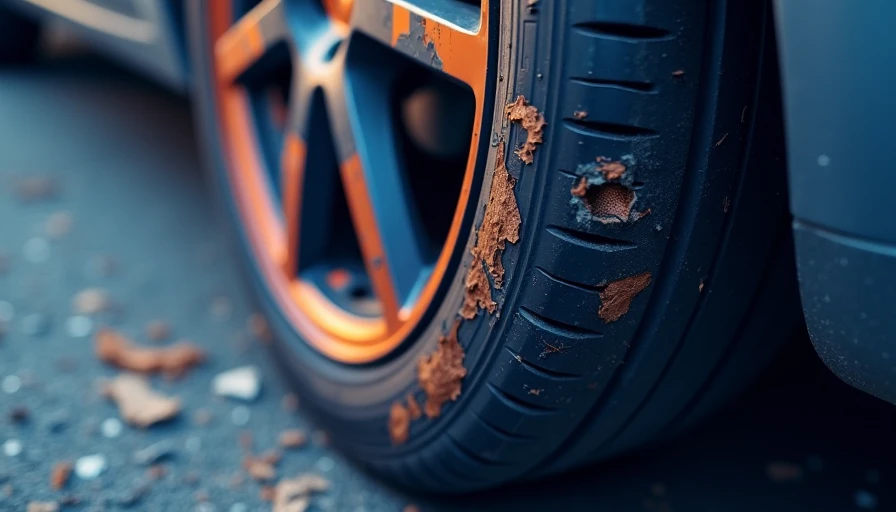
Here’s what I see go wrong most often: the driver looks at the outer face, sees a small cut, and assumes the inside is fine. It usually is not that simple. Inspect both the sidewall and the shoulder, where the tread starts to curve downward. If you find exposed cords, a bubble, a slice deep enough to catch a fingernail, or a crack that opens when you flex the rubber by hand, the tire is done.
A tire puncture sidewall can also come from a pothole or curb strike, not just a sharp object. In those cases I check the wheel lip, valve stem, and bead seat for dents or leaks. If the tire held air long enough to be driven flat, I also inspect the inside for heat damage. At that point the tire may look usable from the outside and still be unsafe. This is the part where a shop’s tire machine and lighted inspection area earn their money.
What replacement usually costs and how to keep the car balanced
For most passenger cars, a decent replacement tire runs about $120 to $220 each, with premium models from Michelin, Continental, and Bridgestone often landing higher. Mounting, balancing, and disposal can add another $25 to $50 per tire at many shops. If the valve stem or TPMS service kit needs replacement, add a little more. That is still cheaper than buying a wheel if the tire goes completely flat and you keep driving on it.
When the car is front-wheel drive and the other tires still have good tread, a single replacement can be fine if the size and tread depth match closely. On many AWD systems, mismatch is a bigger deal. Shops often try to keep rolling diameter very close, because a big difference can stress the center coupling or transfer case. If the remaining tires are worn, I would rather sell one matching tire plus a rotation than force the drivetrain to work around a bad match. Torque to spec on the lug nuts when the car is back on the ground; many passenger cars land around 80 to 100 lb-ft, while some trucks run higher. Use the factory number, not a guess.

Can this ever be repaired?
If the damage is truly in the sidewall, the answer for a street-driven car is almost always no. A few specialty off-road or racing setups use internal boots or temporary field repairs to get off the trail, but that is not the same as a long-term repair for daily driving. With a tire puncture sidewall, the safest call is replacement because the damage lives in the part of the tire that flexes most and protects least.
That rule gets even stricter if the puncture is close to the bead, if the tire has been run flat, or if you can see any belt or cord material. Once the cords are compromised, the tire can fail without much warning. I would rather have a driver spend money once than pay twice because a cheap repair turned into a shredded fender liner and a bent wheel.
How to avoid the next one
The best prevention is boring, and that is exactly why it works. Check pressures once a month with a real gauge, not just the dash light. Rotate the tires on schedule so one corner does not wear out early. Watch for curb rash, pothole hits, and low tread depth, because worn tires lose some of the cushion that protects the casing. If you regularly haul heavy loads, keep the pressures at the door-jamb recommendation for that load, not the soft ride number you wish you could use.
I also tell owners to look at the inside sidewalls during oil changes. A nail in the tread gets attention fast, but a small cut from road debris can hide until the tire is warm on a long drive. Catch it early, and you can plan the fix instead of dealing with a roadside shutdown. If you want the short version, remember this: a tire puncture sidewall is usually a replace-it problem, not a patch-it problem, and acting early protects the wheel, the suspension, and your time.
You can do this. Here’s the safe, right way.
Comments
No comments yet — be the first to share a thought.