WHAT IS ENGINE COOLANT AND WHY DOES YOUR VEHICLE NEED IT?
The engine serves as the beating heart of every motor vehicle, with most automobiles relying on internal combustion engines to generate the force needed for movement. The very nature of these systems means that engines produce enormous amounts of heat during operation. Without adequate protection measures in place, engine components face accelerating wear and, in extreme cases, can literally melt from sustained exposure to high temperatures. Such damage translates into repair bills running into the thousands of dollars — yet preventing engine overheating is surprisingly straightforward.
The solution: engine coolant.
This article explores what engine coolant does, the advantages it provides, and tackles the questions vehicle owners ask most frequently: What is the actual function of engine coolant? How long can an engine operate without coolant? And how does the cooling process actually work?
Engine coolant — referred to as antifreeze in many parts of the world — shields engines from the dangers of overheating. However, temperature regulation is only part of what engine coolant does. It simultaneously performs a lubrication function, coating the engine's moving components and protecting them against damage to:
Coolants manage and distribute heat generated within the engine while also providing antifreeze protection, ensuring the engine continues to operate under ideal conditions. Because the internal combustion engine produces energy by burning fuel, a portion of that energy inevitably manifests as heat that is absorbed by the engine and its surrounding components. The remainder of this thermal energy exits the vehicle through the exhaust system.
Ultimately, the primary function of engine coolant is to prevent heat-related engine failures and maintain the engine within its optimal operating temperature range.
Selecting the correct engine coolant type and mixing ratio delivers the following advantages:
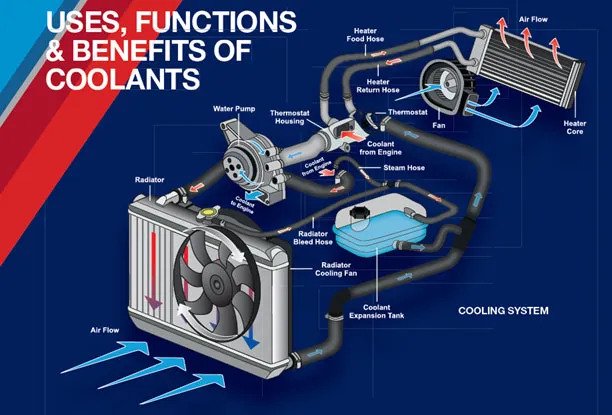
Before the coolant enters the engine block and contacts its moving parts, it is stored in a reservoir positioned near the radiator. Typically, engine coolant operates within a liquid cooling system in which the water pump drives the coolant through the entire engine circuit. The radiator is responsible for drawing heat away from the returning coolant, a fan forces air across the radiator core to aid this process, and the thermostat monitors and regulates the coolant's temperature throughout.
While the engine runs, coolant circulates continuously — flowing through the engine and returning through the radiator in an ongoing loop. It exits through the radiator's lower outlet and is drawn by the water pump into the engine block and cylinder head, where it absorbs excess thermal energy and brings the engine's running temperature into an acceptable range. After completing this task, the heated coolant travels back to the upper section of the radiator, where it is cooled before the cycle begins again.
For a detailed breakdown of the different coolant varieties available, we recommend consulting this informative article. Using an incorrect coolant formulation or improper mixture ratio can trigger corrosion and inflict damage on internal engine components. When this mistake is made repeatedly over an extended period, the consequences can escalate to severe engine damage and complete failure.
The appropriate coolant change interval varies depending on the specific make and model of your vehicle. To get the most out of your engine coolant and keep your engine performing at its best, it is strongly advisable to follow the antifreeze maintenance and replacement schedule outlined in your manufacturer's recommendations.
As a general guideline, the cooling system should be serviced every 80,000 kilometers, although certain modern engines may call for coolant maintenance at more frequent intervals, such as every 16,000 kilometers.
Once you have established the correct service interval for your vehicle, always drain the old coolant completely before introducing fresh fluid. This step clears accumulated dirt and rust particles from the system, reducing the risk of blockages and maintaining flow efficiency.
Valvoline's core mission centers on delivering the highest-quality products available to vehicle owners everywhere.
Our lineup features premium engine coolant formulations engineered to help your engine reach peak performance while extending its operational life. Backed by over 150 years of expertise, customers trust that every Valvoline product undergoes rigorous development and testing before reaching the market.
Our high-performance oils, coolants, and lubricants are the product of deep industry knowledge, relentless innovation, and advanced manufacturing technology. Every Valvoline fluid is carefully evaluated and field-validated by our dedicated research teams, with testing carried out in our state-of-the-art facilities to ensure consistent delivery of maximum performance, minimal downtime, and optimized operating costs.
Among the standout engine coolant products available through our website are:
At Valvoline, your needs matter to us, and we share your commitment to keeping vehicles, machinery, and equipment running reliably through demanding environments and the harshest operating conditions.
Comments
No comments yet — be the first to share a thought.