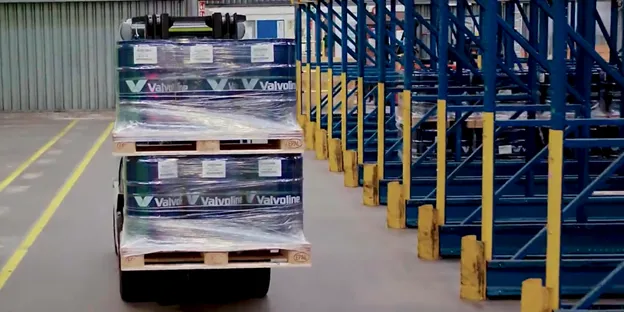
INDUSTRIAL LUBRICANT STORAGE: ESSENTIAL BEST PRACTICES
Much like mechanical parts and components, industrial lubricants deserve to be treated as a critical element of your vehicles, machinery, and equipment. Substandard or degraded oils and industrial grease can negatively impact vehicle performance and lead to expensive repair bills.
One of the most reliable methods for extending lubricant performance and shelf life is ensuring they are stored correctly. Below is everything you need to understand about proper lubricant storage.
Industrial lubricants come in a variety of packaging formats designed to accommodate different consumption volumes and storage conditions. The most widely used packaging options include pails (20L), drums (200L), totes (1600L), and bulk tanks.
The appropriate lubricant packaging for your operation will depend on your available storage space and specific requirements. Several key factors should guide this decision:
Lube cans, drums, buckets, and totes must be kept indoors in clean, dry environments. The primary objective is to shield them from potential contaminants like dust, debris, and moisture.
Always verify that your lubricant storage facility is built to comply with the highest applicable safety standards. This encompasses a broad range of measures, including the installation of restricted-access industrial doors, oil-resistant industrial floor mats, and fire-rated storage cabinets.
Equally important is the manner in which lubricants are physically stored. The following practices should be put into place as soon as possible:
As noted above, indoor storage remains the optimal approach for preserving lubricant safety, effectiveness, and longevity. That said, constructing a dedicated lube storage room is not always feasible due to factors such as limited space or budget restrictions.
When outdoor storage of industrial lubricants is unavoidable, it is essential to take deliberate steps to safeguard the products adequately.
A common oversight among automotive and industrial lubricant users is underestimating the importance of proper lubricant labeling. When applied consistently and thoughtfully, this practice helps avoid the waste of costly lubrication products and reduces the likelihood of cross-contamination — the unintended mixing of two incompatible lubricants that can cause serious damage.
Begin by categorizing products according to the lubricant manufacturer's labels. The front label typically contains the most critical information, including SAE viscosity grade and lubricant type. The back label offers detailed specifications, usage recommendations, and supplementary product information.
For larger containers such as totes or drums, consider establishing your own alphanumeric or color-coded identification system — or a combination of both. Consult your lubricant supplier to see whether they offer labeling guidelines that may be worth adopting.
This approach makes it easier for your staff to identify stored lubricants at a glance and apply them in accordance with manufacturer specifications.
Every automotive and industrial lubricant carries a defined shelf life, which varies based on multiple factors including the additives incorporated into the lubrication formula. Using a product beyond the OEM-recommended shelf life can compromise its performance characteristics.
This is precisely why adopting a First-In, First-Out strategy for lubricant storage is so important. As the name suggests, this method prioritizes the use of the oldest lubricant stock first, ensuring that no product is kept past its recommended service life.
Effective industrial maintenance requires a well-organized approach to lubricant storage. This is a multi-faceted process that demands careful attention. Only through the combination of a properly designed storage environment, accurately sized orders, timely product rotation, and systematic labeling practices can you minimize the risk of lubricant degradation and fully extend its usable life.
For any questions regarding the storage and handling of Valvoline automotive and industrial lubricants, do not hesitate to reach out to us or locate your nearest Valvoline distributor across Europe!
Comments
No comments yet — be the first to share a thought.