Ball Joint Problems: Symptoms, Inspection, and Safe Repair
Learn how to spot a failing ball joint, inspect suspension play safely, and decide when a repair belongs in a professional shop instead of your garage.
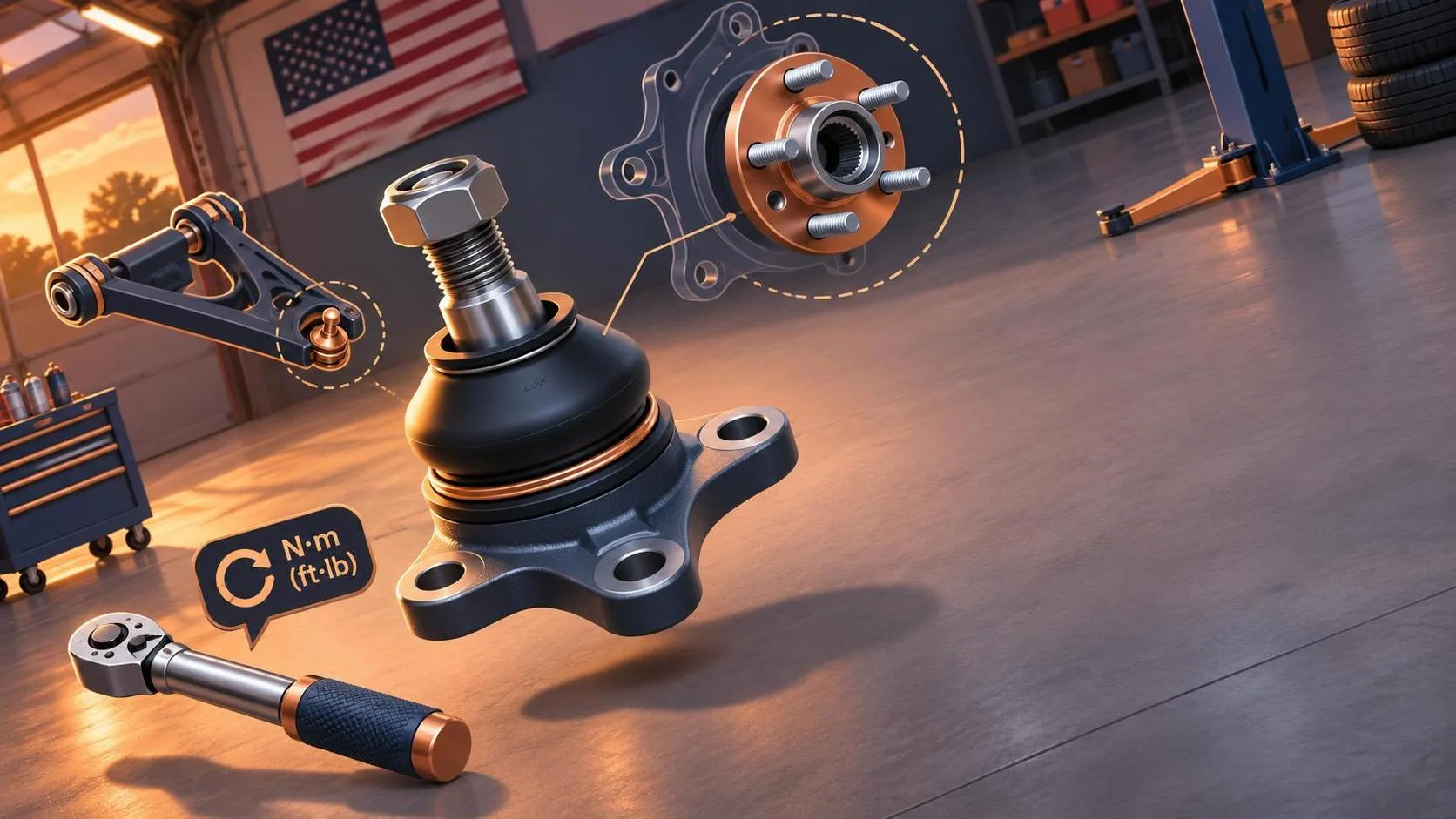
A clunk over a bump does not automatically mean you need a new ball joint. That noise can also come from a sway bar link, control arm bushing, or another worn component. A ball joint is the pivot that connects a suspension control arm to the steering knuckle, allowing the suspension to move while the wheels steer. When one wears beyond its specified limit, it needs prompt attention: a severely worn joint can separate and cause loss of vehicle control.
If the wheel looks tilted, steering suddenly feels unstable, or you suspect the joint is close to separating, do not drive the vehicle to a shop. Arrange a tow. Otherwise, use the symptoms below to decide what to inspect, not to order parts sight unseen. You can do this. Here's the safe, right way.
What a worn ball joint feels and sounds like
A dull clunk from one front corner while crossing a driveway or rough pavement is a common clue. You might also notice wandering, uneven tire wear, or a steering wheel that no longer feels consistent. None of these symptoms identifies the part by itself. Tires, alignment, wheel bearings, tie rods, and other suspension parts can produce similar complaints.
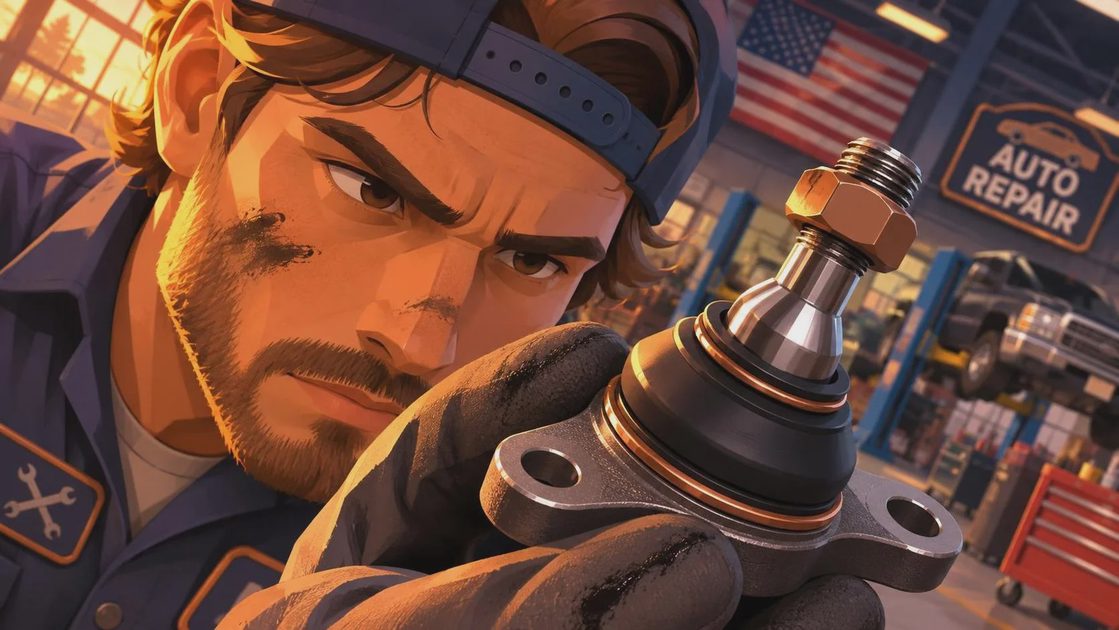
A torn dust boot deserves a closer look. The boot holds lubricant in and helps keep water and grit out. A damaged boot does not prove the joint has excessive play, but contamination can accelerate wear. Depending on the vehicle and the condition of the joint, the service procedure may call for replacing the joint or the complete control arm.
Here's what I see go wrong most often: someone hears a noise, replaces one part, and discovers the noise is still there. Start by noting when it happens. Is it present while turning, braking, or simply rolling over bumps? That information helps a technician reproduce the problem and narrow the inspection.
Safety First: Set up for an inspection
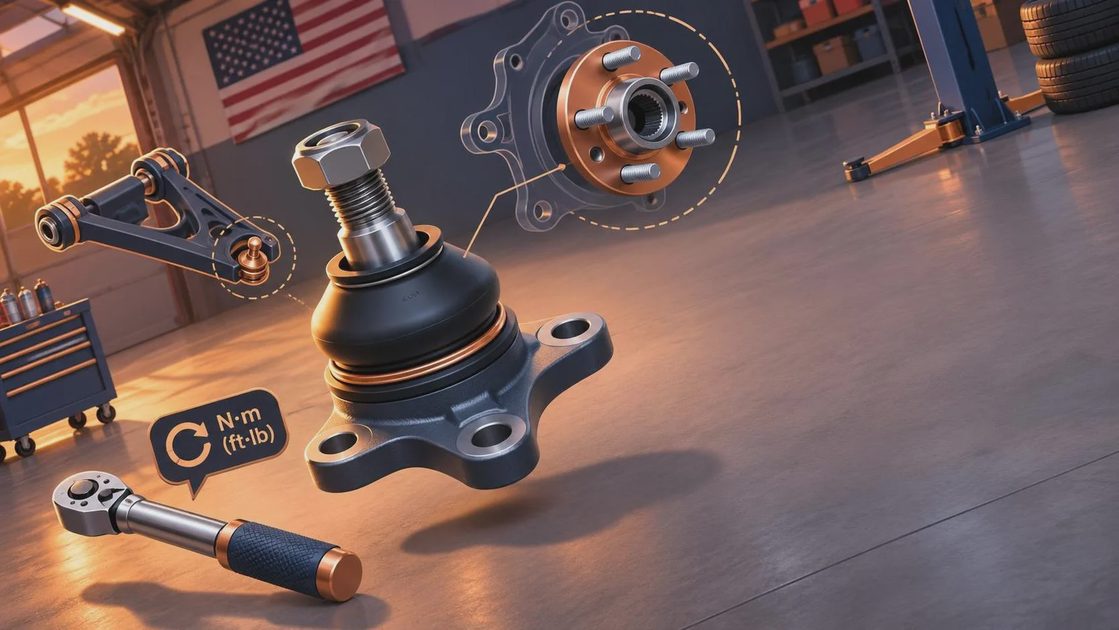
Do not crawl under a vehicle supported only by a jack. Park on a firm, level surface, set the parking brake, and chock the wheels that remain on the ground. Use the lifting and support points specified for your vehicle, and lower it onto properly rated jack stands. Keep hands clear of pinch points when checking suspension movement.
Suspension designs differ. On some vehicles, a spring or torsion bar can place significant force on the control arm. Supporting the wrong component or separating a joint without controlling that force can cause serious injury. Before lifting anything, consult the factory service information for the correct support location and the procedure for unloading or loading the joint being checked.
Tool Check: Gather wheel chocks, a properly rated floor jack and jack stands, a flashlight, safety glasses, and the vehicle-specific service procedure. If the procedure calls for measuring movement, use the specified dial indicator and a suitable mounting setup. A helper can be useful for moving the wheel while you watch the suspension, but only if the vehicle is securely supported.
How to check a ball joint for play
First, look at the boot and surrounding area with the vehicle safely supported as the service procedure directs. Check for splits, missing boot clamps, grease leakage, corrosion, and obvious damage. Also look at the neighboring tie rod ends and bushings; a visual check may reveal another component that needs attention.
Next, follow the manufacturer's test method for that exact suspension. It may require the suspension to be supported in a particular position, the wheel to be moved in a specified direction, or a dial indicator to be placed against a particular component. Watch for movement between the joint's stud and housing, not just movement elsewhere in the suspension.
Some joints have a permitted amount of movement; others have a different inspection standard. Compare the measurement with the service limit for your vehicle. Don't assume that every bit of visible movement is failure, or that a tight-feeling wheel proves the joint is good. A wheel bearing or tie rod can also create play, so identify which connection actually moves before drawing a conclusion.
If you cannot see the joint clearly, cannot position the suspension as specified, or do not have the required measuring equipment, stop and have a qualified shop inspect it. An uncertain diagnosis is a good reason to ask for help, not a reason to pry harder.
Repair choices and torque specifications
Some vehicles use a separately replaceable joint; others call for a complete control arm assembly. The correct approach depends on the vehicle's construction and the available replacement procedure. Pressed-in joints may require a dedicated ball joint press and correctly sized adapters. Some repairs also require a separator, vehicle-specific holding tools, and an alignment afterward.
This is not a universal bolt-off, bolt-on job. The suspension may store spring or torsion-bar energy, and a press can damage an arm or launch a part if it is set up incorrectly. If the repair requires unloading a spring or torsion bar and you lack the specified equipment or training, leave that work to a professional.
Torque to spec — and yes, the spec matters. There is no safe universal number for these fasteners. Before starting a repair, obtain the vehicle-specific torque specifications for the ball joint stud nut, joint retaining bolts or fasteners where fitted, control arm mounting bolts if removed, and wheel lug nuts. Follow the specified tightening sequence, any angle-tightening instructions, and requirements for new nuts, bolts, cotter pins, or other locking hardware. Some control arm bushings must be tightened at a specified suspension position; check the procedure rather than guessing.
What to ask the shop after diagnosis
Ask the technician to identify the affected side and show you the measured play or the damaged component. Request an estimate that separates parts, labor, and any alignment charge. An alignment may be required or advisable after suspension work, but it does not replace a sound inspection or correct a loose joint.
Finally, ask whether the tire wear or other suspension components need attention. Once the repair is complete, the steering should feel predictable and any related clunk should be addressed. If the original symptom remains, return for a recheck rather than assuming a new part has solved every problem.
Comments
No comments yet — be the first to share a thought.