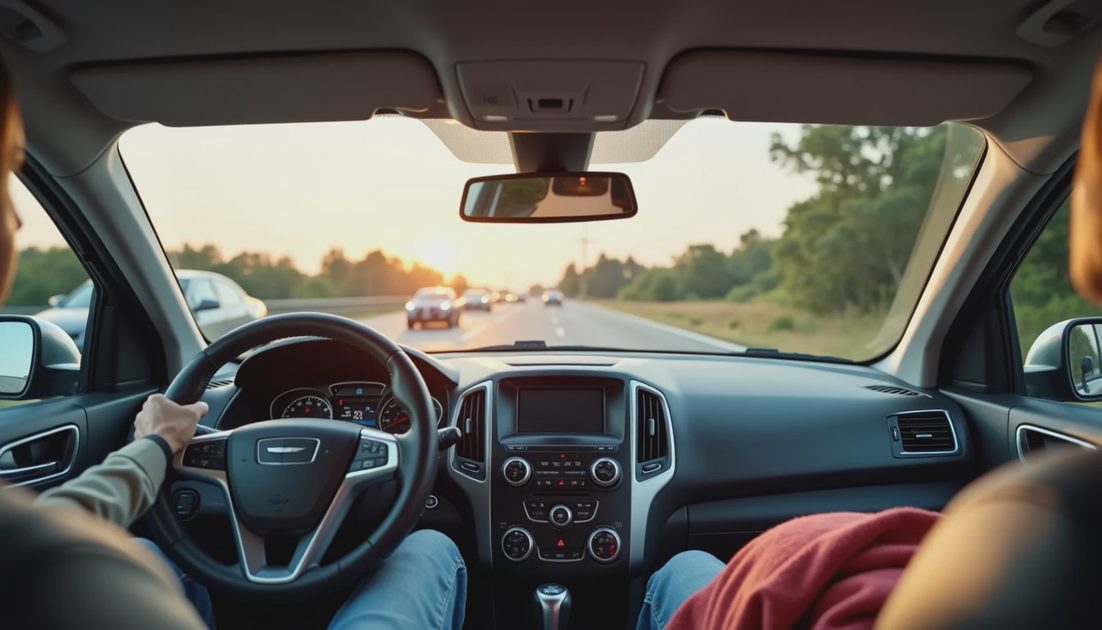
Defensive driving in heavy traffic can prevent a life-changing crash—and a holiday trip you’ll never forget for the wrong reason
Why This Matters (cost/safety/longevity payoff)
Here’s what I see go wrong most often: drivers treat heavy traffic like a patience test instead of a hazard zone. They “just try to keep up,” stop scanning, and assume other drivers will behave predictably. That’s when the low-speed fender bender turns into a chain-reaction crash—or a close call with a pedestrian, cyclist, or an aggressive lane-changer.
Defensive driving (taking reasonable action to prevent a collision, per the National Safety Council) is your best ally in heavy traffic because it buys you time. Time to react, time to brake smoothly, time to avoid the person merging without looking. In the real world, extra reaction time is the difference between a clean stop and an insurance claim.
What You Need to Know (specs, types, intervals)
Safety First
- Heavy traffic is not “safer” just because speeds are lower. Unpredictable lane changes, distracted drivers, and sudden stops spike risk.
- Your job is not to be “right.” Your job is to get home. That means giving right of way when appropriate and staying ready for the unexpected.
- If you feel your stress climbing, slow down and reset—aggressive driving and panic reactions are a collision multiplier.
Tool Check (yes, driving has tools)
Before you roll, make sure you have what GEICO recommends for long drives and emergencies:
- First aid kit
- Flares
- Snacks
- Blankets
And do the pre-drive planning that prevents bad decisions later:
- Check weather and road conditions in advance so you can plan your route and know what to expect.
The measurable habits from the source (these are your “specs”)
- Check your mirrors every three to five seconds (defensive driving instructors’ recommendation cited in the source).
- Use turn signals for turns; many traffic laws require signaling within 100 feet of a turn (the source notes this, and also says to check local regulations).
- Control speed based on more than the posted limit: you may need to slow down for wet or icy conditions, even when you’re “within the limit.”
How It Works (step-by-step or explanation)
Think of defensive driving like running a safe shop bay: you’re constantly scanning, controlling the space around you, and planning your next move before you’re forced into one.
1) Plan before you start the engine
1. Check weather and road conditions in advance. If conditions are deteriorating, you want to know before you’re committed.
2. Build a margin into your trip. Heavy traffic plus bad weather equals delays—rushing is where people start tailgating and making risky passes.
3. Pack the basics: first aid kit, flares, snacks, blankets.
Pro Tip: If you’re driving for the holidays, assume traffic will be heavier than “normal rush hour.” Plan one extra stop so you’re not tempted to drive tense and thirsty.
2) Run a constant scan (mirrors + road ahead)
1. Check mirrors every three to five seconds. Don’t stare—sample. You’re looking for fast-approaching vehicles, motorcycles splitting lanes (where legal), and drivers drifting.
2. Continuously scan ahead for possible dangers. In heavy traffic, hazards form quickly: brake lights ripple, a lane ends, someone darts for an exit.
Why this works: scanning keeps you from being surprised, and surprise is what causes panic braking and last-second swerves.
3) Manage right of way and intersections like a professional
1. Give right of way to fellow motorists, but stay ready for someone to take it when they shouldn’t.
2. Follow traffic signals and stop signs, and approach at an appropriate speed so you have time to react.
3. Scan intersections before entering them. Intersections are where “violating right of way” bites hardest.
Pro Tip: Before you enter an intersection on green, do a quick left-right scan. A distracted driver can run a light even in gridlock.
4) Control speed for conditions, not ego
1. Watch the posted speed limit—but don’t stop there.
2. Adjust to weather conditions. The source is clear: even if you’re obeying the limit, you may need to slow down on wet or icy roads.
Why this works: traction changes with conditions, and braking distance grows fast when grip drops.
5) Keep space: following distance and response time
1. Keep a safe distance from other vehicles in heavy traffic.
2. Slow your speed to give yourself ample response time.
This is the easiest “collision insurance” you can buy for free. Space is time, and time is options.
6) Pass, turn, and position the car deliberately
GEICO calls out several collision-causing behaviors identified by the NSC. Here’s how to avoid them in real driving:
- Turning improperly: Always use turn signals so drivers, pedestrians, and cyclists know where you’re going. Many laws require signaling within 100 feet of a turn—check your local rules.
- Passing improperly: Signal, check blind spots, and check in front of and behind your vehicle. You should be able to pass without getting too close to the car ahead or exceeding the speed limit. If you can’t do that, it may not be safe to pass.
- Driving left of center: Be patient. Stay behind cyclists or pedestrians until it’s safe to pass. Watch ahead for animals or obstacles so you can brake or steer around them—without swerving into the other lane.
Pro Tip: In heavy traffic, the “perfect” lane change is the one you don’t have to make. If you’re not 100% sure it’s clean, stay put and lose 30 seconds instead of risking a collision.
7) Stay calm when other drivers don’t
The source specifically recommends watching for impaired, distracted, and aggressive driving—and using techniques like deep breathing to keep calm under pressure.
Why this matters: your brain makes worse decisions when you’re angry or rushed. Calm driving is safer driving.
Common Mistakes (myths, pitfalls, warnings)
- Mistake: “I’m going the speed limit, so I’m safe.” Not on wet or icy roads. The source notes you may need to slow down even if you’re obeying the limit.
- Mistake: Mirror-checking only when you want to change lanes. In heavy traffic, threats come from behind and beside you constantly. Stick to the three to five seconds mirror rhythm.
- Mistake: Assuming right of way is protection. It’s a legal concept, not a force field. Yield properly, but be prepared for unexpected lane changes and turns.
- Mistake: Late signaling or no signaling. Turning improperly is a major collision contributor. Signal every time, and remember the 100 feet guideline mentioned in the source (and verify your local law).
- Myth: “Passing faster fixes traffic stress.” In heavy traffic, frequent passing often increases risk. If you can’t pass without crowding or speeding, it’s not a safe pass.
Bottom Line (summary, recommended action)
Defensive driving in heavy traffic is about creating time and space: plan ahead, pack basic supplies, scan continuously, check mirrors every three to five seconds, keep a safe following distance, and adjust speed for weather—not just the speed limit. Signal your turns (the source notes many laws use a 100-foot rule), check blind spots before passing, and stay calm with techniques like deep breathing when traffic gets tense.